
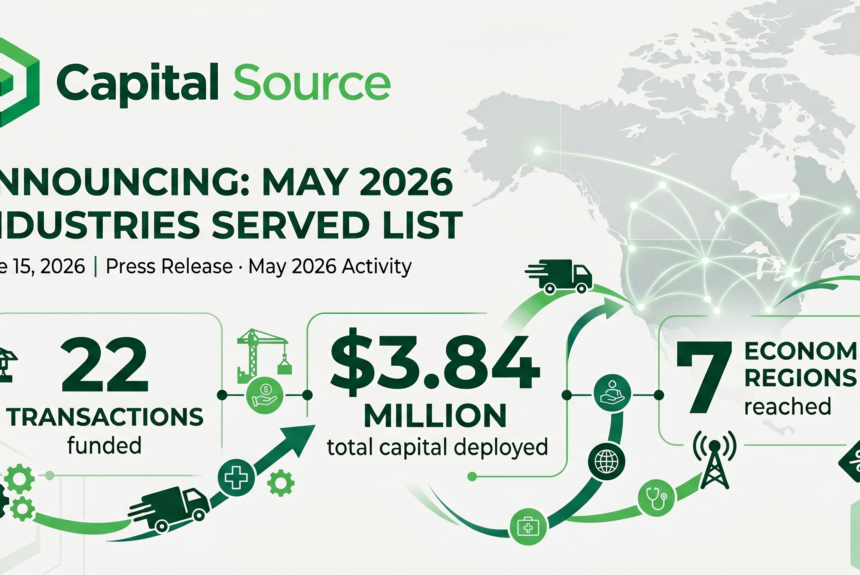
May 2026 Industries Served List Press release · May 2026 funding activity A look inside where private credit went to work in May 2026: 22 fundings, $3.84 million, and seven economic regions of North America. Chicago, June 12, 2026. Capital Source®, through its Private Credit Division, closed 22 transactions totaling $3.84 million in May 2026, financing operators across 18 states and provinces spanning seven economic regions of North America. The month’s activity reflects steady demand for flexible private credit across construction, manufacturing, transportation, healthcare, business services, communications, retail, and wholesale. The mix was deliberately diversified rather than concentrated in a...
Revenue Based Financing Underwriting
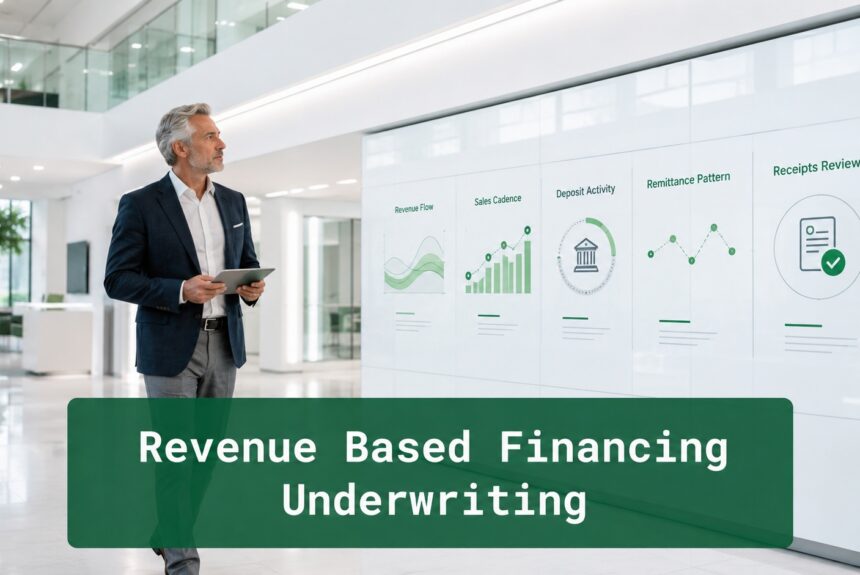
Revenue-Based Financing Underwrites Revenue Durability, Not Margin A revenue-based facility is repaid from the stream itself, so the underwriting question is whether revenue is stable, repeatable, and predictable enough to support the payment. A business with thin margins and a steady, repeatable revenue stream can support a revenue-based facility. A higher-margin business with lumpy, unpredictable revenue may not. The margin did not decide the fit. The durability of the revenue did. The instrument looked past the profit in each sale and read the source that repays it: whether revenue keeps arriving on a schedule the payment can rely on. This...
Asset Based Lending Fund Companies Losing Money
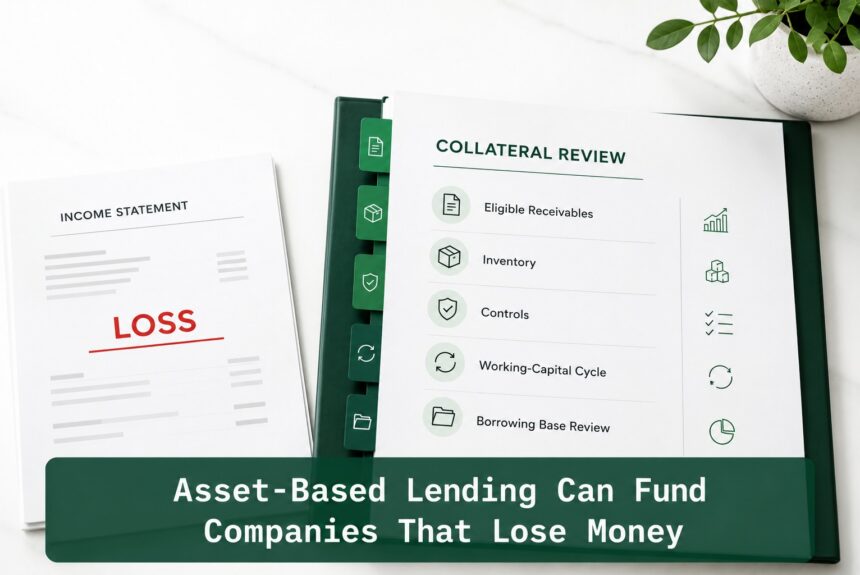
Why Asset-Based Lending Can Fund Companies That Lose Money The Collateral Selection Criterion explains why asset-based lenders underwrite eligible collateral, controls, and the working-capital cycle—not last year’s profit. A lender looks at a company that lost money last year and declines. A second lender looks at the same company and extends an asset-based facility. Both read the same financials. They were not reading the same thing. The first lender read the income statement and saw a loss. The second lender read the collateral base, the working-capital cycle, and the controls around collections, then saw a borrowing base. The difference...

Financing the Agent Economy
Financing the Agent Economy Audio dialogue 🎧 Listen to the Audio Dialogue This audio dialogue was generated with AI from this article and is provided for general information only — it is not financial advice, and availability, amounts, structures, and terms depend on each business’s circumstances and are subject to review and approval. The software you used to log into is becoming software that runs itself. As the “agent economy” rewires how businesses operate — and levels the playing field for owners and advisors alike — the question shifts from which tools you buy to how you fund the edge...
Operating Cycle Standard SDE EBITDA
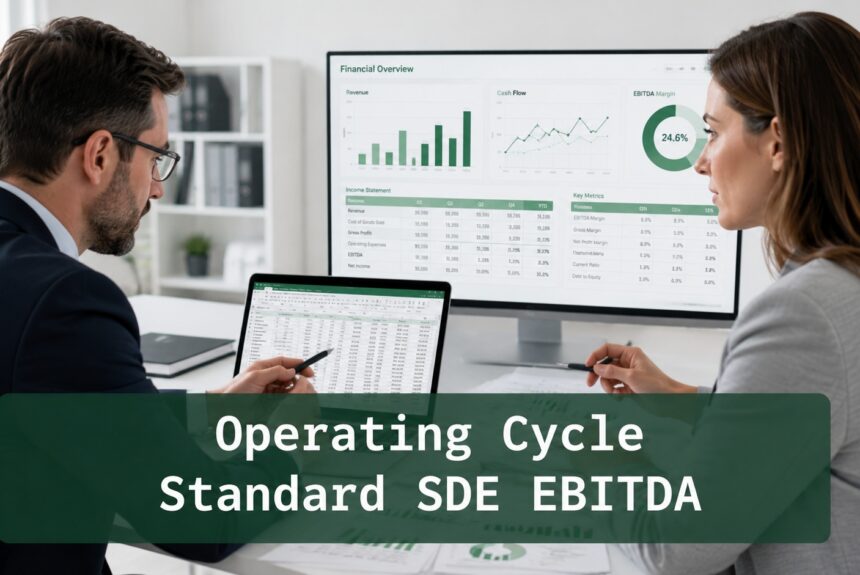
The Operating Cycle Standard: Why SDE and EBITDA Are Entry Points, Not Conclusions Accrual earnings can start the valuation conversation, but working capital, cash conversion, and true free cash flow determine whether a business can sustain the price, debt, and obligations it is being asked to carry. Most lower middle market valuation and credit conversations begin at SDE or EBITDA. That is a useful starting point, but it is not the place where business strength is proved. SDE, or Seller’s Discretionary Earnings, is an owner-operated business earnings measure that starts with business earnings and adds back owner compensation, certain discretionary...