
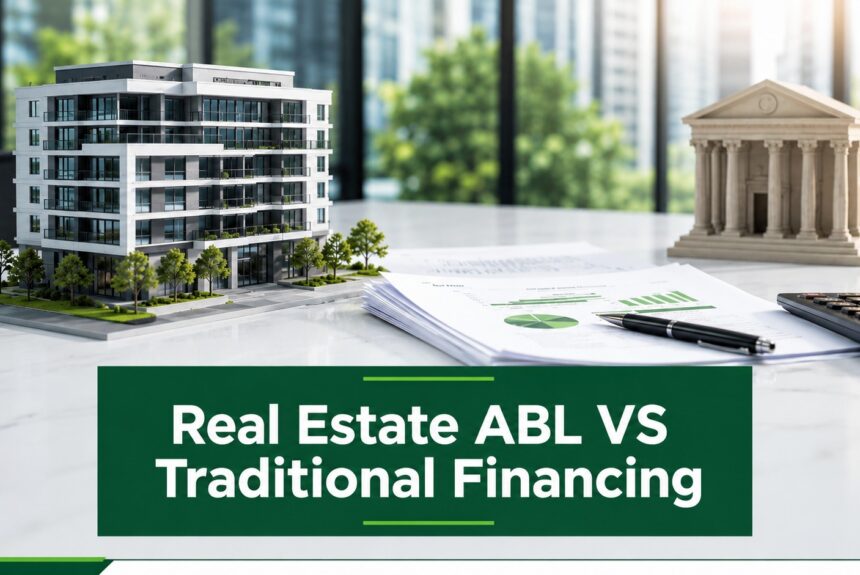
Real Estate ABL vs. Traditional Financing: How Investors Choose the Right Capital Path A practical guide to comparing real estate asset-based lending and traditional financing by property condition, collateral strength, borrower documentation, closing timeline, and exit strategy. Real estate investors rarely lose deals from lack of interest. They lose deals from timing, documentation gaps, weak underwriting fit, or capital that cannot move at the speed of the opportunity. That is where the choice between traditional financing and real estate asset-based lending becomes more than a rate comparison. The better question is not simply, “Which loan is cheaper?” The better question...
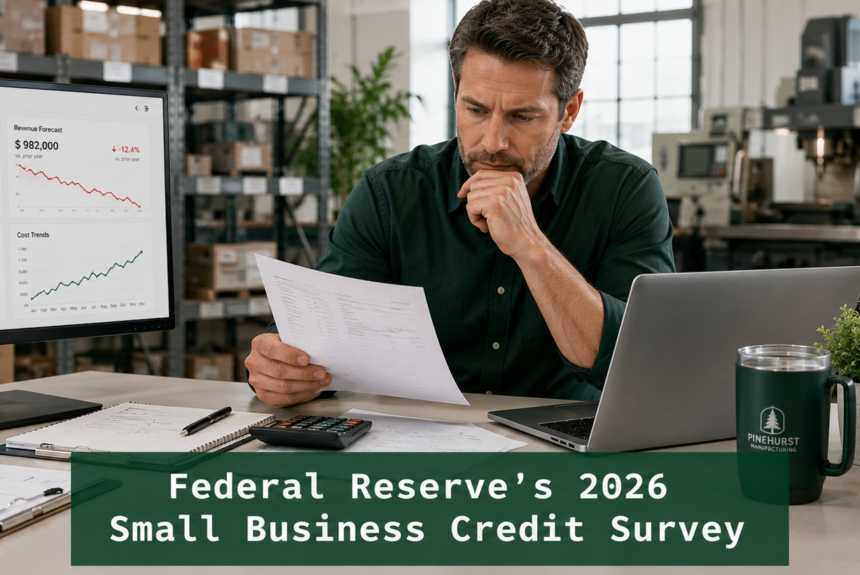
Rising Costs, Declining Revenue Expectations: What the Fed’s Small Business Survey Reveals About 2026
Rising Costs, Declining Revenue Expectations: What the Fed’s Small Business Survey Reveals About 2026 The Federal Reserve’s 2026 Small Business Credit Survey describes a cost squeeze: input and wage costs are the top financial challenge, while revenue and hiring expectations have slipped to their lowest levels since 2020. For owners across construction, transportation, manufacturing, retail, wholesale, and services, that gap is fundamentally a working-capital problem — and there are practical ways to bridge it. Ask any owner running a business between $1 million and $10 million in revenue what changed in the last year, and you’ll hear a version of...
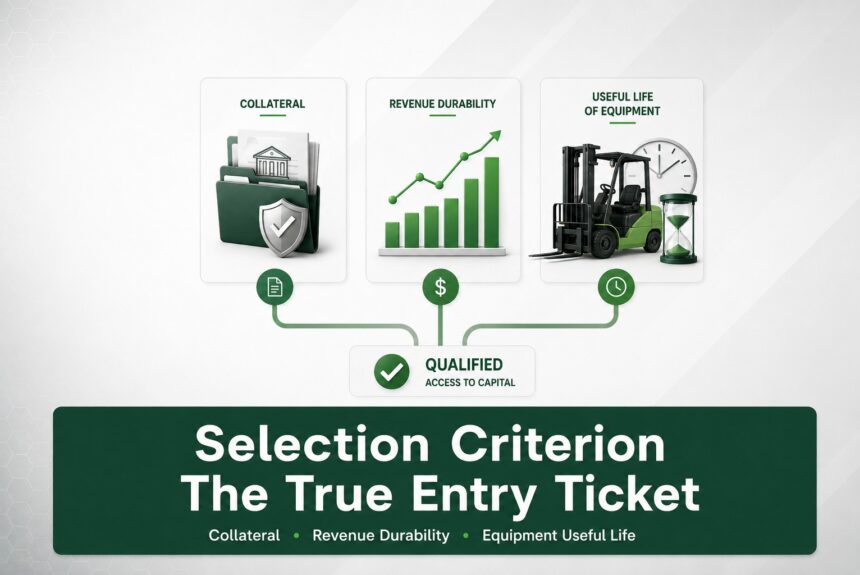
Selection Criterion True Entry Ticket
The Selection Criterion as the True Entry Ticket Why collateral, revenue durability, and useful life decide access to capital before profitability does. Three articles, one correction. Across the three articles in Series One, the real issue was never whether the business was profitable. It was what each financing instrument actually underwrites. Asset-based lending selects for the collateral base. Revenue-based financing selects for the durability of the revenue. Equipment financing selects for the asset and its useful life. Three instruments, three criteria, and the income statement is the criterion for none of them. The Selection Criterion is the property a capital...
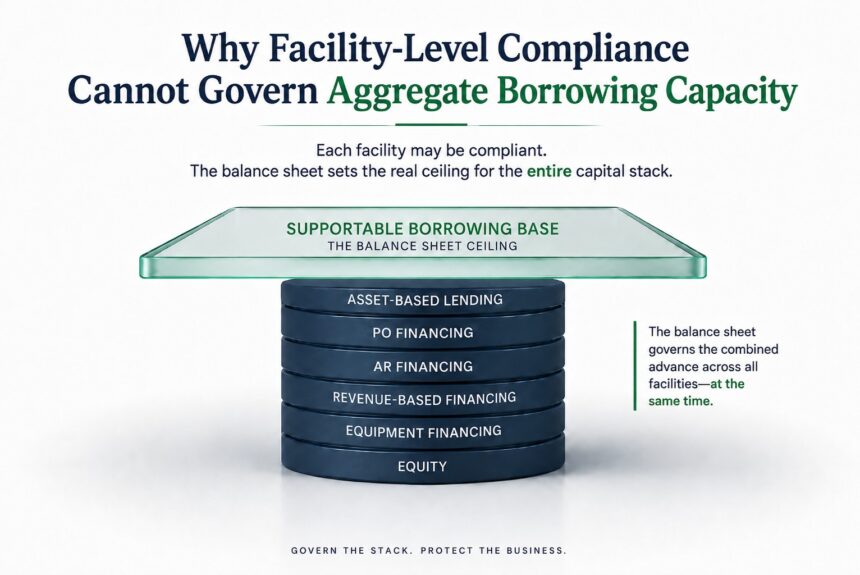
Supportable Borrowing Base Capital Stack
Supportable Borrowing Base: The Balance Sheet Ceiling for the Capital Stack Why Facility-Level Compliance Cannot Govern Aggregate Borrowing Capacity A business passes every covenant on every facility and still runs short of cash at the moment the cycle peaks. Each lender reads its own instrument and finds nothing wrong. None of them reads the combined draw against what the balance sheet can carry. The balance sheet is over its limit at the same time every facility looks compliant, since compliance is being measured one instrument at a time and the limit belongs to the whole stack. This closes Series Three...
Equipment Financing Useful Life
Why Equipment Lenders Fund on Useful Life, Not Enterprise Health The Useful Life Coverage Criterion reads the asset’s value, remaining life, resale market, and financing term—not the borrower’s earnings. A weak enterprise is funded on a strong, long-lived, widely resalable machine. A healthier enterprise is declined on a specialized asset with a short remaining life and no resale market. The health of the enterprise did not decide either case. The asset and its useful life did. Equipment financing looked past the income statement and read the only thing that actually covers the advance: the value of the asset over the...