
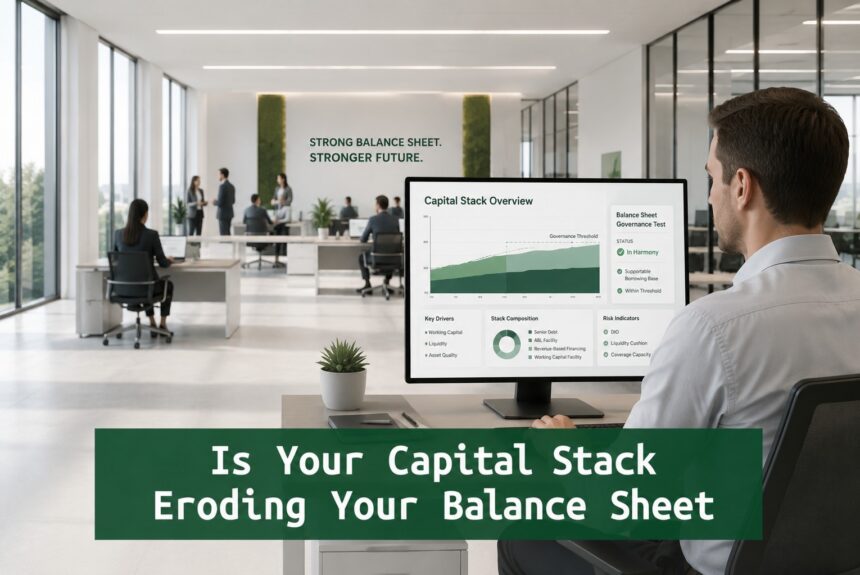
The Balance Sheet Governance Test: Is Your Capital Stack Eroding Your Balance Sheet? How the Harmony-Harm Threshold turns the Supportable Borrowing Base into an ongoing governance standard for multi-instrument capital stacks A capital structure does not fail the moment it crosses a threshold. It fails the moment it crosses a threshold that no one was watching. The Supportable Borrowing Base established in Article Four is the ceiling below which the combined advance must remain for the balance sheet to sustain the full stack. The Balance Sheet Governance Test compares the current combined advance against that ceiling every borrowing base cycle...
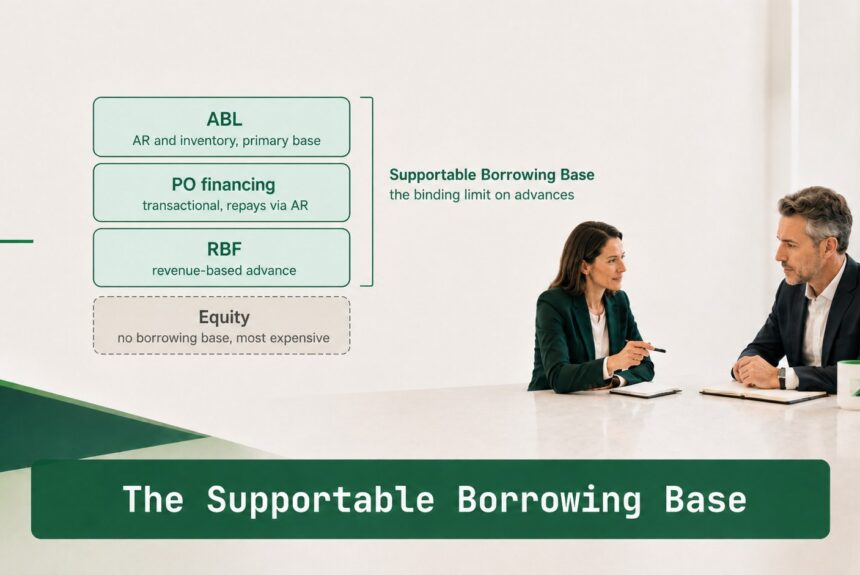
The Supportable Borrowing Base
The Supportable Borrowing Base: How to Calculate the Maximum Your Balance Sheet Can Sustain Across All Facilities How the Equity Adequacy Test, the NWC Floor Stack Test, and the Debt Service Coverage Test Establish the Binding Ceiling for the Full Stack Most businesses know what their individual facilities will advance. The ABL line has a borrowing base. The PO financing facility has an advance limit. The revenue-based financing instrument has a funded amount or renewal capacity. Each lender calculates its own exposure against its own collateral, repayment source, and risk model. What most businesses do not calculate is the maximum...

Candle Manufacturing Financing
Candle Manufacturing Financing Why a Seasonal Producer Stalls at Peak Demand, Not for Lack of It A candle manufacturer can carry its strongest order book of the year and still run short of cash before the season pays for itself. The problem is not demand. It is timing. Wax, glass, fragrance, packaging, labor, and finished inventory are funded long before the holiday quarter ships. Wholesale buyers, boutique chains, national retailers, and corporate gifting programs often pay on net terms after the product leaves the floor. The producer spends first, ships later, and collects last. That timing gap is the operating...
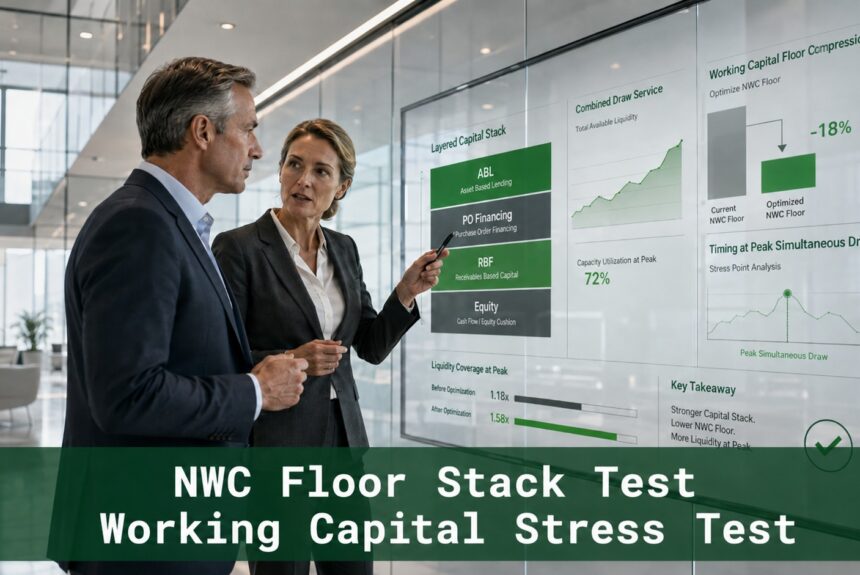
NWC Floor Stack Test Working Capital Stress Test
The NWC Floor Stack Test: Working Capital Stress Testing for Multi-Instrument Capital Stacks How the NWC Floor Stress Test Extends to the Combined Stack Level — and Why Single-Facility Working Capital Analysis Understates Compression Risk A working capital floor can look safe when each financing instrument is tested alone and still fail when the full capital stack draws at once. That is the problem the NWC Floor Stack Test is built to expose. PO financing, ABL, and RBF do not compress working capital one at a time during peak demand. They often draw simultaneously against the same operating base, before...
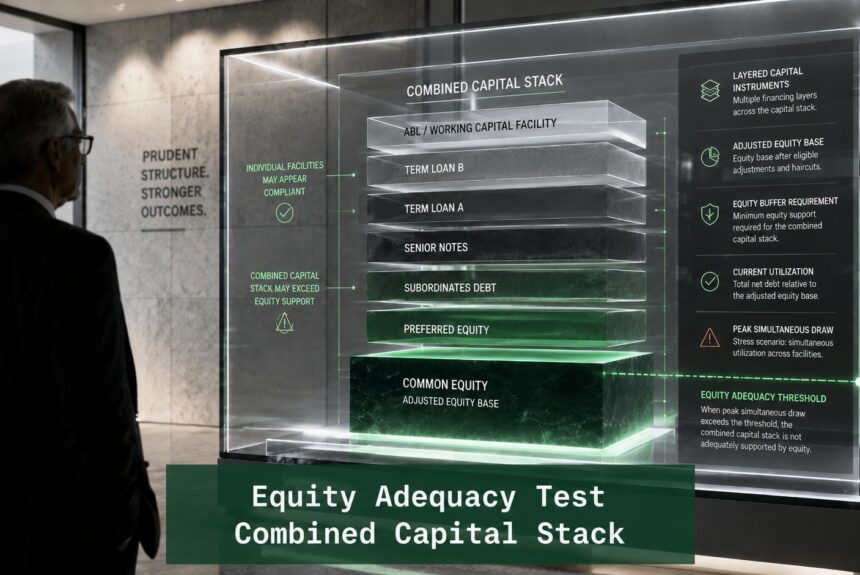
Equity Adequacy Test Combined Capital Stack
The Equity Adequacy Test: Can Your Balance Sheet Support the Combined Capital Stack? Why individual facility compliance does not prove equity adequacy — and how to test whether your equity base can support current and peak simultaneous draw. A business can draw its ABL facility to the ceiling, deploy its RBF component at peak, and carry its PO financing through the production cycle — each instrument inside its documented parameters, each lender satisfied with the compliance picture — and still be drawing against an equity base the combined stack has already exceeded. The compliance picture is clean. The equity picture...