Category: Asset-Based Lending

Home » Asset-Based Lending
Digital Media Financing in 2026: Invoice Factoring vs. Stretch Financing (and When to Use Both)
Post

Digital Media Financing in 2026: Invoice Factoring vs. Stretch Financing (and When to Use Both)

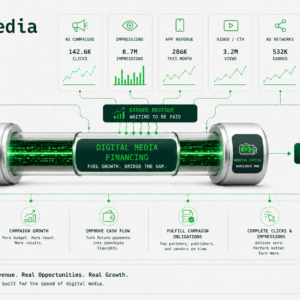
Two ways to turn revenue into working capital, and the one question that tells you which you actually need. Most digital media operators go looking for digital media financing at one of two moments. The first is when the work is done and the money just isn’t here yet. You delivered the campaign, you sent...

wo professionals reviewing acquisition financing materials with a deferred purchase price stress test dashboard in the background.
Post

Seller Notes Acquisition Financing

Seller Notes in Acquisition Financing: Why Deferred Purchase Price Must Be Stress Tested How Buyers Should Test Seller Financing Before the LOI A seller note can make an acquisition look financeable before the repayment structure has been proven. The buyer reduces the cash required at closing, the seller bridges a valuation gap, and the senior...

Financial underwriting graphic showing capital need, collateral support, cash flow capacity, lender structure, and post-close liquidity around a lender confidence dashboard
Post

Small Middle Market Financing Capital Stack

Small Middle Market Financing: Build a Capital Stack Lenders Can Underwrite A practical framework for testing total capital need, required debt, collateral support, operating cash flow, and post-close liquidity before lender outreach. Small and middle market transactions often fail before lender approval, not after it. The failure point is usually the capital stack. The buyer...

Real estate financing comparison showing property collateral and bank financing documents with the title Real Estate ABL VS Traditional Financing
Post

Real Estate ABL VS Traditional Financing

Real Estate ABL vs. Traditional Financing: How Investors Choose the Right Capital Path A practical guide to comparing real estate asset-based lending and traditional financing by property condition, collateral strength, borrower documentation, closing timeline, and exit strategy. Real estate investors rarely lose deals from lack of interest. They lose deals from timing, documentation gaps, weak...