
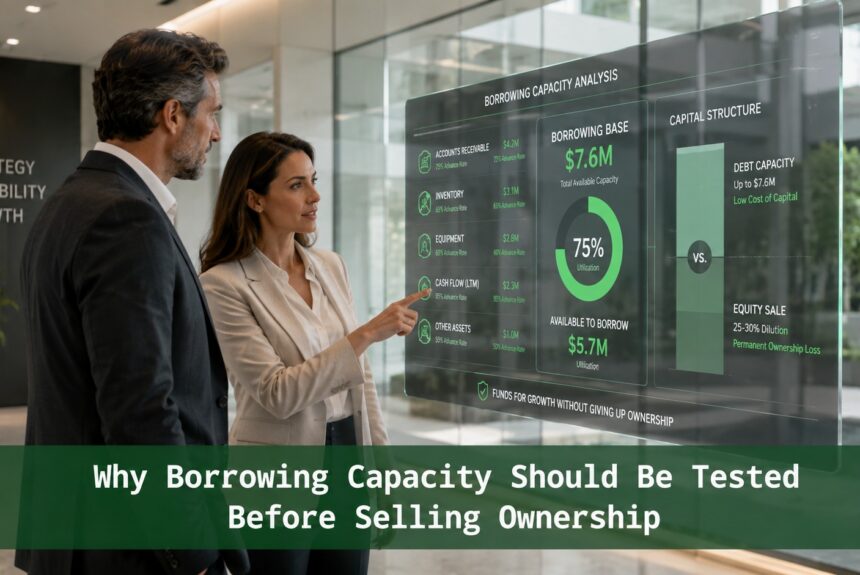
Equity vs Debt Financing: Why Borrowing Capacity Should Be Tested Before Selling Ownership A Capital Structure Framework for Matching Debt Capacity, Collateral, Cash Conversion, and Equity to the Right Funding Need Business owners often face the capital question too late. The company needs cash. Growth is available. Inventory must be purchased. A contract must be fulfilled. Equipment must be replaced. Payroll timing is tight. A competitor may be available for acquisition. A new location may make sense. The owner then asks a broad question: should I sell equity or borrow money? That question is not wrong, but it is incomplete....
AI Is Rebuilding Professional Services: What It Means for Your Finance Function
Artificial intelligence is quietly rewiring professional services from the inside, and the finance function is near the center of it. Here is what the shift means for how your business runs its numbers, and why the capital partner you choose now matters more than it did a year ago. For most of the last two decades, the businesses that served you, your accountant, your lawyer, your insurance broker, your lender, sold you a tool or a process and billed for the hours around it. That model is being rebuilt. AI is moving knowledge work from selling effort to selling outcomes,...
SBA Doubles the Combined 7(a) and 504 Loan Limit to $10 Million: What Capital-Intensive Businesses Should Know
The SBA just doubled how much an owner can borrow across its two flagship programs to $10 million. For capital-intensive operators buying real estate and equipment, the change rewards businesses that structure the two loans together, and it leaves a familiar gap for the cash cycle that neither program is built to cover. If you run a manufacturing plant, a construction firm, a logistics fleet, an energy project, or a food-production operation, your growth is rarely a single line item. It is a building, a press line, a fleet, and the working capital to keep all of it moving while...
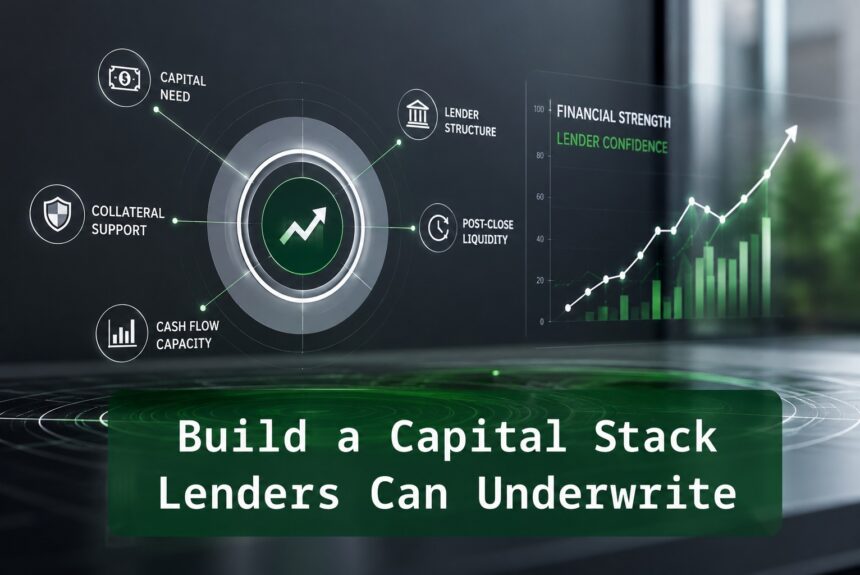
Small Middle Market Financing Capital Stack
Small Middle Market Financing: Build a Capital Stack Lenders Can Underwrite A practical framework for testing total capital need, required debt, collateral support, operating cash flow, and post-close liquidity before lender outreach. Small and middle market transactions often fail before lender approval, not after it. The failure point is usually the capital stack. The buyer may understand the purchase price, the seller may agree to basic terms, and the business may appear financeable on paper. Yet the structure breaks when the deal is tested against collateral, working capital, operating cash flow, diligence timing, and closing liquidity. A lender-ready financing plan...
The 7 Financial Models Every Founder Should Know (and How AI Builds Them Faster)
These are the financial models every founder should know, the seven that do most of the heavy lifting in finance, from a kitchen-table forecast to a nine-figure acquisition. Knowing what each one answers, and where AI now speeds up the build, makes you sharper in every capital conversation you will ever have. Most founders did not start a business to build spreadsheets. But the operators who raise capital on better terms, negotiate acquisitions with confidence, and read their own numbers without flinching tend to share one trait: they understand the handful of models that finance actually runs on. You do...