

Summer Slow Weeks and Tourism Peaks: Seasonal Working Capital for Restaurants A great summer can drain a restaurant’s bank account before it ever fills it, and a slow stretch can quietly do the same. The operators who come through the season strongest are not the ones who fund a crisis. They are the ones who plan capital around the whole cycle before it starts. Most restaurant financing advice treats the busy season as the only problem worth solving: stock up, staff up, and chase the rush. The reality on the ground is two-sided. You spend heavily on inventory and labor...
Capital Source Announces June 2026 Industries Served List
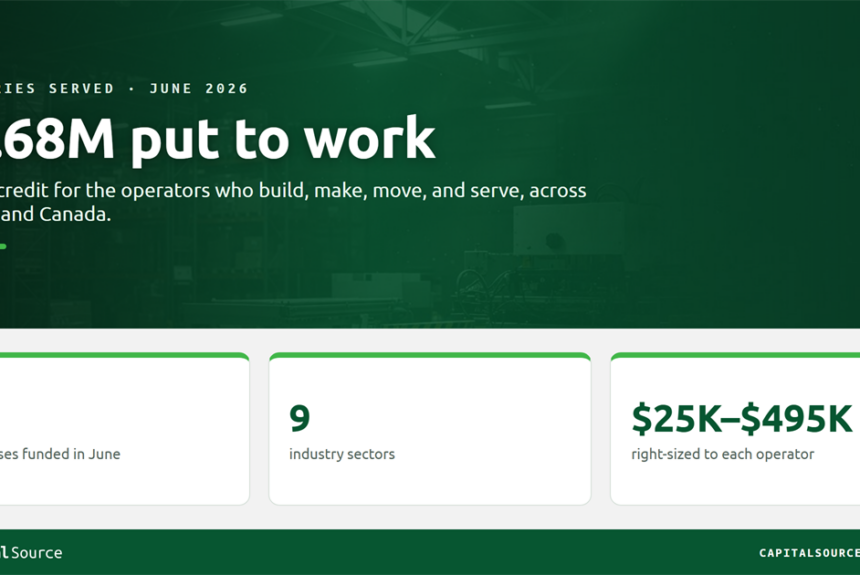
Capital Source Announces June 2026 Industries Served List Press release · June 2026 funding activity A look inside where Capital Source’s Private Credit Division went to work in June 2026: 23 fundings, $3.68 million, across nine industry sectors in the United States and Canada. Chicago, July 6, 2026. Capital Source®, through its Private Credit Division, closed 23 transactions totaling $3.68 million in June 2026, financing operators across the United States and Canada. The month’s activity reflects steady demand for flexible private credit across manufacturing, wholesale and distribution, retail, professional and advertising services, construction, food service, transportation and logistics, security services,...
The CFO’s Four C’s of Capital: Sourcing, Allocation, Reporting, and Management
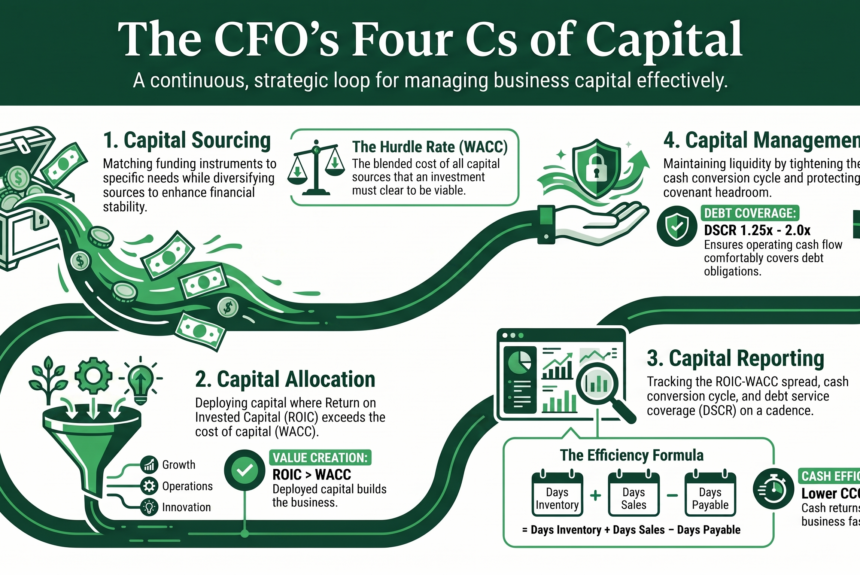
The CFO’s Four C’s of Capital: Sourcing, Allocation, Reporting, and Management The CFO’s job, at its core, is the stewardship of capital across four linked functions: where it comes from, where it goes, whether it is working, and whether it stays healthy. Get the framework right and every dollar that enters or leaves the business has a job, a return to beat, and a place to land. The CFO’s job, at its core, is the stewardship of capital across four linked functions: sourcing it (where funding comes from), allocating it (deploying it for the highest risk-adjusted return), reporting on it...

Seller Notes Acquisition Financing
Seller Notes in Acquisition Financing: Why Deferred Purchase Price Must Be Stress Tested How Buyers Should Test Seller Financing Before the LOI A seller note can make an acquisition look financeable before the repayment structure has been proven. The buyer reduces the cash required at closing, the seller bridges a valuation gap, and the senior lender may view seller participation as a sign of confidence. Yet none of those benefits prove that deferred purchase price can be paid safely after the business changes hands. A seller note is not free capital. It is delayed purchase consideration that usually becomes buyer...

The Altman Z-Score: Score Your Financial Health Before the Bank Does
The Altman Z-Score: Score Your Financial Health Before the Bank Does Before a credit team ever reads your story, many run a quiet piece of math that compresses your whole balance sheet into a single number. You can run that same number yourself, on your own statements, weeks before you apply, and know roughly how a lender’s model is likely to read you. The Altman Z-Score is one of the most widely taught early-warning models in commercial finance, and it is sitting inside spreadsheets and credit tools you will never see. It takes five ratios off your financial statements and...