
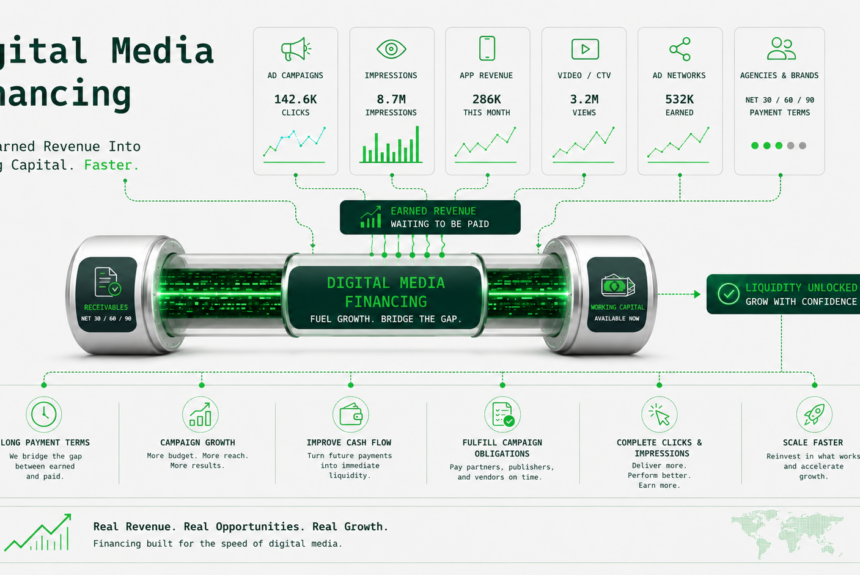
Two ways to turn revenue into working capital, and the one question that tells you which you actually need. Most digital media operators go looking for digital media financing at one of two moments. The first is when the work is done and the money just isn’t here yet. You delivered the campaign, you sent the invoice, and now you’re sitting on Net 60 trying to figure out how to fund next month’s spend. The second is when the work isn’t done because you can’t afford to do it yet. The insertion orders are signed, the demand is real, and...

How to Negotiate Better Financing Terms (the I FORESAW IT Framework)
Most owners walk into a financing conversation ready to argue about one number, the rate, and leave the rest of the agreement on the table. The terms you do not negotiate are the ones that govern your flexibility for years. The good news is that preparation, not pressure, is what actually moves a deal, and there is a proven checklist for it. When you accept a credit facility, the interest rate is only the headline. The covenants, the personal guarantee, the prepayment penalty, the reporting calendar, and the cure periods are what you live with month to month, and each...

Summer Slow Weeks and Tourism Peaks: Seasonal Working Capital for Restaurants
A great summer can drain a restaurant’s bank account before it ever fills it, and a slow stretch can quietly do the same. The operators who come through the season strongest are not the ones who fund a crisis. They are the ones who plan capital around the whole cycle before it starts. Most restaurant financing advice treats the busy season as the only problem worth solving: stock up, staff up, and chase the rush. The reality on the ground is two-sided. You spend heavily on inventory and labor weeks before peak revenue arrives, and in the same calendar you...
Capital Source Announces June 2026 Industries Served List
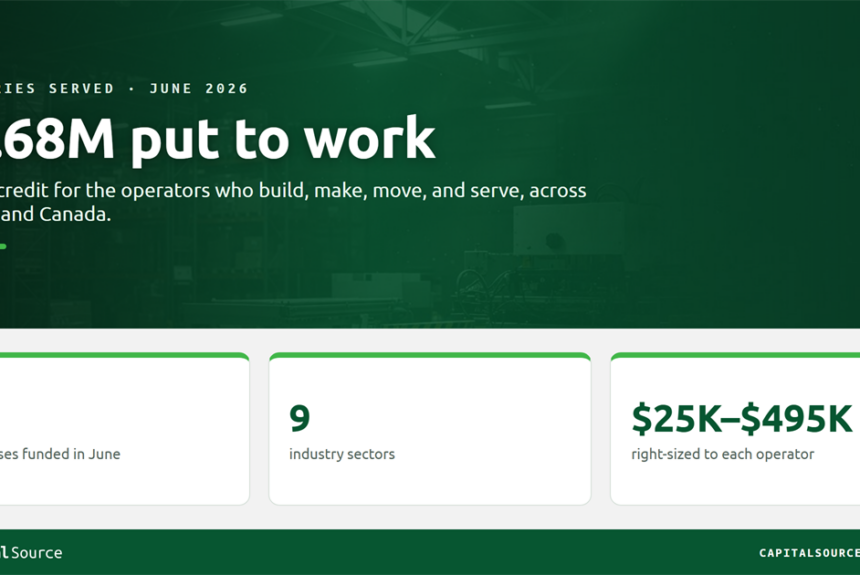
Press release · June 2026 funding activity A look inside where Capital Source’s Private Credit Division went to work in June 2026: 23 fundings, $3.68 million, across nine industry sectors in the United States and Canada. Chicago, July 6, 2026. Capital Source®, through its Private Credit Division, closed 23 transactions totaling $3.68 million in June 2026, financing operators across the United States and Canada. The month’s activity reflects steady demand for flexible private credit across manufacturing, wholesale and distribution, retail, professional and advertising services, construction, food service, transportation and logistics, security services, and telecommunications. The mix was deliberately diversified rather...
The CFO’s Four C’s of Capital: Sourcing, Allocation, Reporting, and Management
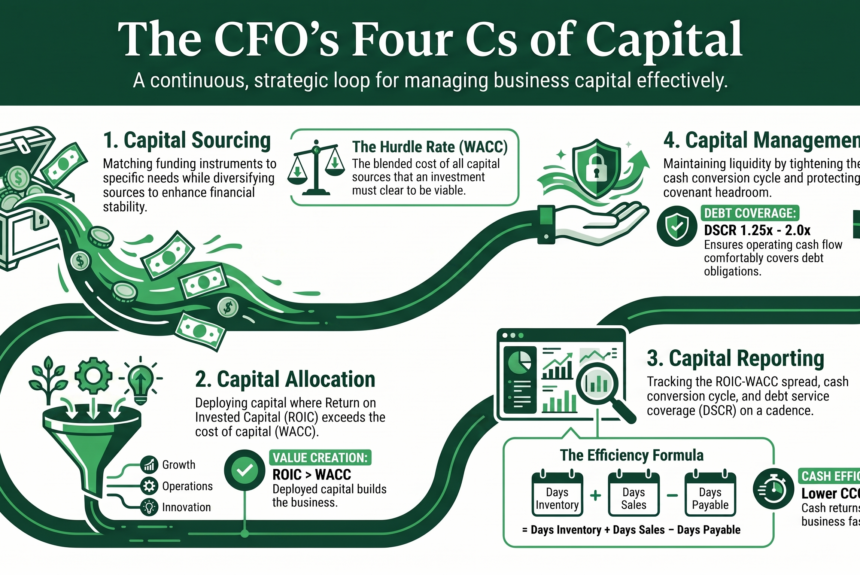
The CFO’s job, at its core, is the stewardship of capital across four linked functions: where it comes from, where it goes, whether it is working, and whether it stays healthy. Get the framework right and every dollar that enters or leaves the business has a job, a return to beat, and a place to land. The CFO’s job, at its core, is the stewardship of capital across four linked functions: sourcing it (where funding comes from), allocating it (deploying it for the highest risk-adjusted return), reporting on it (the metrics that show whether it is working), and managing it...