

Capital Source Announces Industries Served – January 2026 Impact Statement In January 2026, Capital Source continued its role as an active private credit partner to small and lower-middle market businesses across the U.S. and Canada. During the month, Capital Source funded 17 transactions totaling $7.4 million, supporting operators across a wide range of industries, deal sizes, and geographic markets. These deployments reflect both the diversity of inbound demand and the firm’s ability to structure capital around real operating needs. Key January Highlights 17 transactions funded $7.4 million deployed Multiple industries supported, from manufacturing and wholesale to transportation and professional services...

Scenario Theater Stress Testing Liquidity
Scenario Theater: The Mechanics of Survival In Part 1 of this series, we introduced the World Engine — the shifting load paths of the global economy — and why macro volatility only destroys companies with internal shear points. This article stands on its own. It builds directly on that foundation. In a high-friction environment, survival is not about forecasting better outcomes. It is about locating failure points inside the system. That shift requires abandoning budgeting and practicing Scenario Theater. Key Points (Executive Summary) Revenue and cash no longer behave as substitutes Break-even has no meaning without liquidity timing Zero growth...

Trust Universal Currency Economic Engine
The Physics of the Engine: Why Trust Is the Universal Currency Introduction: Headlines vs. How the Machine Actually Works You’ve seen the headlines: “U.S. Trade Deficit Doubles.” It’s usually framed like a scoreboard—as if the U.S. is “losing.” For business owners, that framing misses how the system functions. In a modern economy, a trade deficit is not a bill. It is a receipt of trust. To explain market reactions, rate spikes, and sudden shifts in borrowing costs, the political framing has to be set aside in favor of the mechanical structure of the U.S. economic engine. Key Points Trade deficits...
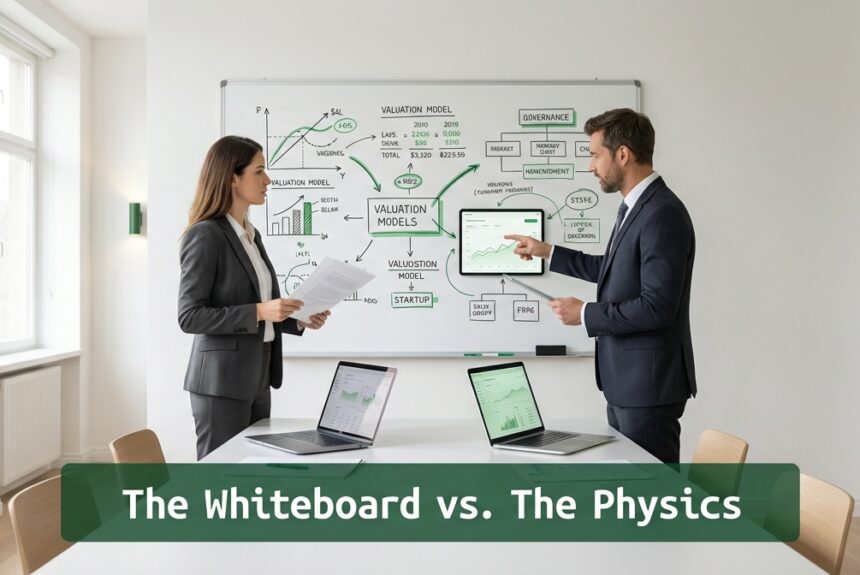
Whiteboard vs Physics Liquidity Governance Founders
The Whiteboard vs. the Physics: Why Financial Discipline Isn’t Enough for Founders Introduction: Visibility Is a Survival Constraint In the volatile lifecycle of a high-growth company, financial visibility is rarely a matter of accounting. It is a matter of survival. At Capital Source, there is a story often told about the whiteboard that saved two companies. A portfolio company, operating on traditional reporting, projected a comfortable eight-month runway. When their real-time capital flow was forensic-mapped onto a physical whiteboard, the founders confronted a different reality: they didn’t have eight months. They had eleven weeks. The whiteboard saved them. But the...
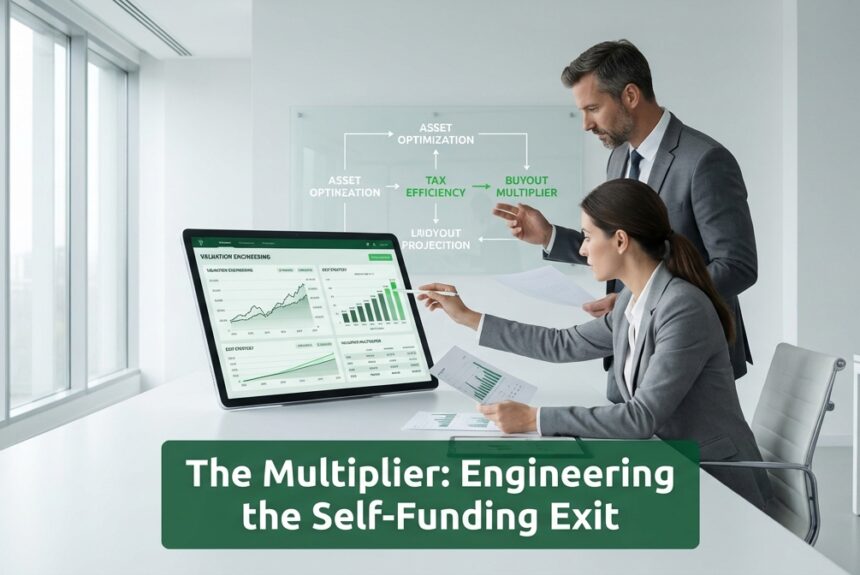
Engineering the Self-Funding Exit
The Multiplier: Engineering the Self-Funding Exit Introduction: Exit as Proof, Not Event The final measure of a CFO is not the cleanliness of the ledger, but the valuation multiple commanded at exit. Traditional finance obsesses over trailing EBITDA — the contrail left behind. The strategic CFO focuses on something more durable: the Symmetric Multiplier. By engineering a high-velocity, self-funding capital architecture, the CFO proves to the market that the business is not static, but kinetic — capable of outrunning macroeconomic friction. This final installment examines how operational speed becomes permanent enterprise value. Key Points (Read This First) Buyers pay for...