

Capital Source Industries Served Report: December 2025 Funding Activity Capital deployment patterns offer a clear view into where lower-middle-market demand is emerging and how private credit is being applied in practice. In December 2025, Capital Source concluded the year with disciplined execution across a diverse set of industries, supporting both capital-intensive operators and growth-oriented businesses. This Industries Served report outlines where capital was deployed, how it was structured, and what the month’s activity signals for operators planning 2026 financing strategies. Key Takeaways 19 transactions funded totaling $3.9 million Manufacturing led overall activity, with additional deployments in transportation, software, and wholesale...
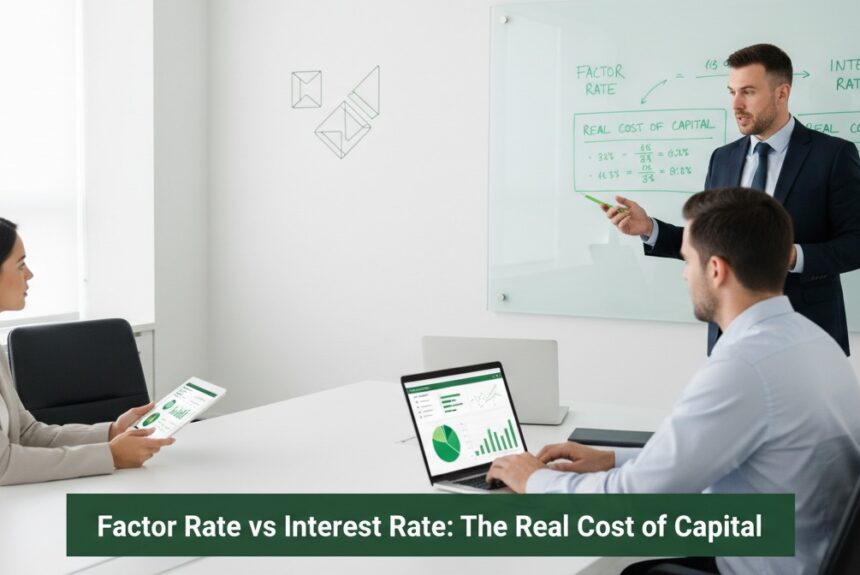
Factor Rate vs Interest Rate Real Cost of Capital
Factor Rate vs Interest Rate: Why Business Owners Misjudge the Real Cost of Capital And how revenue-based financing exposes the real cost of capital Introduction Most business owners believe they understand interest rates. A smaller percentage feels cheaper than a larger one. A factor rate looks bigger, so it feels more expensive. That instinct is reasonable. That instinct marks the start of the confusion. Percentages and factor rates describe different pieces of cost under different assumptions. Neither one explains how capital behaves after it enters a business. Money exists over time, under pressure, inside cash flow. This difference becomes clear...
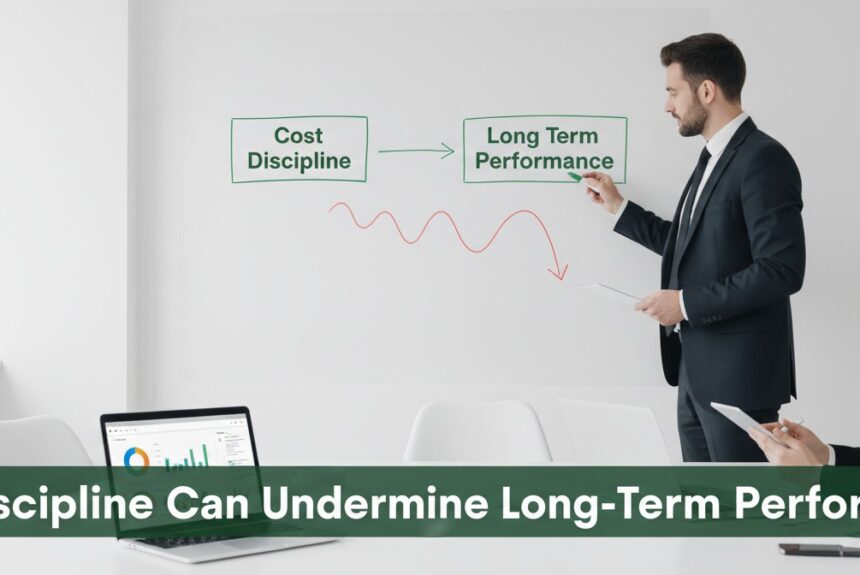
Cost Discipline Can Undermine Long-Term Business Performance
Why Cost Discipline Can Undermine Long-Term Business Performance (Part 1) Cost discipline is often treated as a proxy for leadership quality. Businesses that control spending are assumed to be well-run, resilient, and prudent. But cost control and performance are not the same thing. When organizations optimize primarily for efficiency, they often degrade the very systems that produce results over time. The damage rarely shows up immediately—and that’s what makes it dangerous. Key Points Efficiency and performance optimize for different outcomes Cost-focused decisions can quietly reduce system capacity Performance systems degrade through underuse, not failure A Business Is a Performance System...

Capital Strategy Matters More Than Capital Price
Why Long-Term Capital Strategy Matters More Than Capital Price Most discussions about capital begin and end with cost. Interest rates, dilution, fees, covenants—these are the variables that show up cleanly on paper and fit neatly into spreadsheets. They are measurable, comparable, and defensible. Yet cost represents only one dimension of capital, and it is rarely the dominant one. Capital operates inside living systems: businesses that move, adapt, learn, and decay over time. Leaders who fixate on capital price often overlook how timing, system velocity, and organizational momentum shape outcomes far more than a few basis points ever could. This essay...

The Economic Feature Film: Beyond the Billboard Headlines
The Economic Feature Film: Beyond the Billboard Headlines Recent economic headlines read like a blockbuster trailer: strong GDP growth, upbeat market sentiment, and confident forecasts. As with film previews, surface signals rarely tell the full story. Behind the billboard numbers sit structural forces such as debt levels, supply chain costs, and sector-specific strain that directly shape business decisions. This article reframes the current economic narrative by separating headline activity from underlying fundamentals. The objective is clarity rather than pessimism: seeing what the full picture shows for operators, lenders, and executives planning past the next quarter. Key Takeaways GDP growth reflects...