
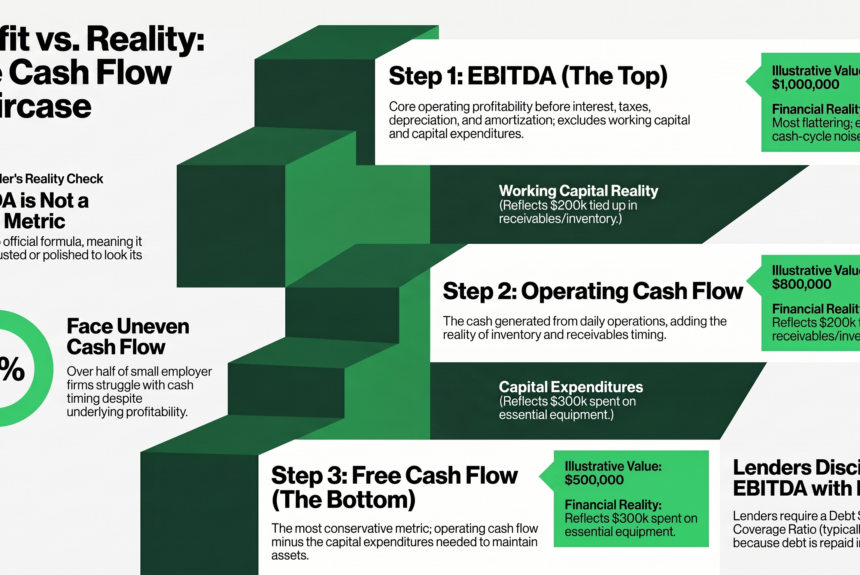
A strong EBITDA number can sit right next to an empty bank account. If you have ever looked at a healthy earnings figure and then struggled to pay a vendor, the problem is not your business. It is that EBITDA and cash are two different things, and knowing the difference is what keeps a profitable company solvent. The cash flow vs EBITDA distinction is one every owner should master, because EBITDA is the metric everyone reaches for to describe how a business is doing. For good reason: it strips out the noise and shows the underlying earning power of operations....
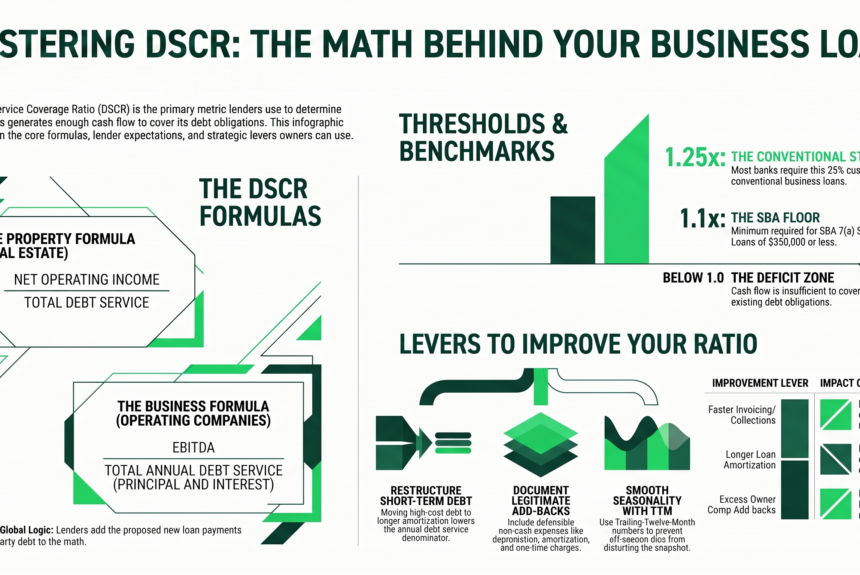
How to Calculate and Improve Your DSCR (the Number Lenders Want to See)
A bank can like your business, respect your story, and still decline the request, all because of one ratio you may never have been shown. Debt service coverage is the number that quietly decides most of these conversations, and once you understand how it is built, you can move it before you ever apply. If a lender has capped your line or turned down a request without a satisfying explanation, the real reason is often a single figure: your debt service coverage ratio. It is the math behind the no, and most owners are never walked through it. The frustrating...
Back-to-School and Holiday Inventory Financing: The Time to Request Funding Is Now
The orders that make your fourth quarter get placed in the summer. The cash leaves your account months before the first holiday sale clears. That gap between buying and selling is exactly where capital structured around your cash cycle earns its keep. If you run a retail store, an e-commerce shop, a wholesale business, or a distribution operation, your calendar does not match your bank statement. Shoppers buy in August and December. You commit the cash in June and July. Two of the biggest selling seasons of the year, back-to-school in the third quarter and the winter holidays in the...
What the Fed’s Rate Hold (and Hawkish Tone) Means for Business Borrowing
The Federal Reserve held rates steady in June 2026, yet the accompanying language and the committee’s own projections leaned in a firmer direction. What follows is a measured account of what a hold of this character does to your cost of capital, and the decisions that, on balance, matter more than any attempt to anticipate the committee’s next step. For a business carrying a line of credit, a variable term loan, or an SBA 7(a) facility, the Federal Reserve’s June decision registers directly on the monthly statement. The headline was a hold. The subtext, on a careful reading, was somewhat...

Growing Too Fast: The Small Business Cash Flow Squeeze
Growth is supposed to fix a business, not break it. Yet the fastest-growing companies are often the ones that run closest to empty, because growth spends cash long before it collects it. This guide explains why the squeeze happens, how to see it coming, and what small business cash flow solutions can bridge the gap while your growth pays for itself. Most cash-flow advice assumes the problem is a slow patch: sales are down, so cash is tight. The harder, quieter problem is the opposite. Sales are up, orders are climbing, the pipeline looks great, and the bank account still...