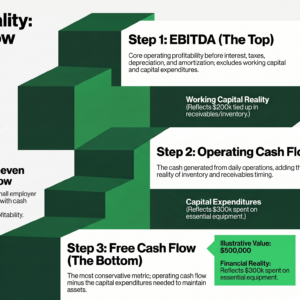
A strong EBITDA number can sit right next to an empty bank account. If you have ever looked at a healthy earnings figure and then struggled to pay a vendor, the problem is not your business. It is that EBITDA and cash are two different things, and knowing the difference is what keeps a profitable...
Tag: Cash Conversion Cycle
Why Profitable Businesses Still Run Out of Cash (and How to Fix It)
Your income statement says you made money. Your bank balance says you are nearly out of it. That gap is one of the most common and most misunderstood pressures in business, and it has very little to do with whether you run a good company. If you have ever closed a strong month, then opened...
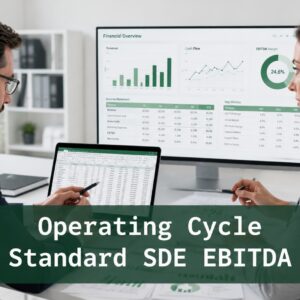
Operating Cycle Standard SDE EBITDA
The Operating Cycle Standard: Why SDE and EBITDA Are Entry Points, Not Conclusions Accrual earnings can start the valuation conversation, but working capital, cash conversion, and true free cash flow determine whether a business can sustain the price, debt, and obligations it is being asked to carry. Most lower middle market valuation and credit conversations...
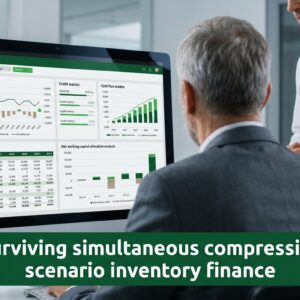
Compression Scenario Inventory Finance
Surviving the Simultaneous Compression Scenario in Inventory Finance How to Govern an Integrated ABL Facility against Real-World Operating Cycle Speed, Depth, and Floor Demands How Inventory Affects NWC Velocity, CCC Timing, and WCC Peak Demand — and Why the Governance Framework Must Account for All Three Simultaneously The NWC-CCC-WCC Governance Trinity operates as a unified,...
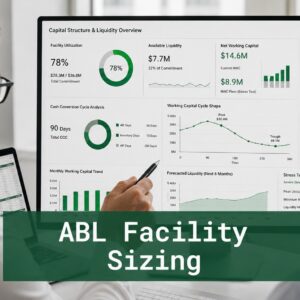
NWC CCC WCC ABL Facility Sizing
NWC, CCC, and WCC: Why Working Capital Variables Must Be Measured Together How the Operating Cycle Trinity Produces Accurate ABL Facility Design The Operating Cycle Trinity is a forensic working-capital framework that evaluates three interdependent variables simultaneously: NWC floor sustainability, cash conversion timing, and peak working-capital demand shape. Together, these measurements determine whether an ABL...