Invoice Factoring in 2026: Rates, Advance Rates, and When It Beats a Loan You delivered the work, sent the invoice, and now you wait 30, 60, sometimes 90 days to get paid while payroll and suppliers will not wait at all. Invoice factoring turns those receivables into working capital today, and in a year of...

Category: Asset-Based Lending
Small Middle Market Financing Capital Stack
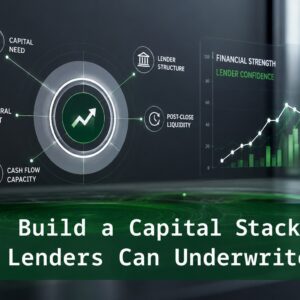
Small Middle Market Financing: Build a Capital Stack Lenders Can Underwrite A practical framework for testing total capital need, required debt, collateral support, operating cash flow, and post-close liquidity before lender outreach. Small and middle market transactions often fail before lender approval, not after it. The failure point is usually the capital stack. The buyer...
Real Estate ABL VS Traditional Financing
Real Estate ABL vs. Traditional Financing: How Investors Choose the Right Capital Path A practical guide to comparing real estate asset-based lending and traditional financing by property condition, collateral strength, borrower documentation, closing timeline, and exit strategy. Real estate investors rarely lose deals from lack of interest. They lose deals from timing, documentation gaps, weak...
Asset Based Lending Fund Companies Losing Money
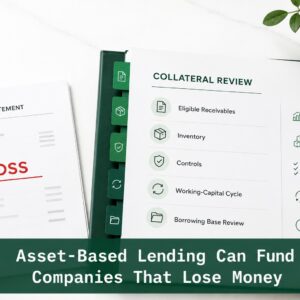
Why Asset-Based Lending Can Fund Companies That Lose Money The Collateral Selection Criterion explains why asset-based lenders underwrite eligible collateral, controls, and the working-capital cycle—not last year’s profit. A lender looks at a company that lost money last year and declines. A second lender looks at the same company and extends an asset-based facility....
ABL Ceiling Governance
ABL Ceiling Governance: How the Borrowing Base Controls RBF Deployment in the Capital Stack How the Integrated Inventory Borrowing Base Sets the ABL Ceiling, Defines the RBF Trigger, and Determines Stack Cost The ABL ceiling is not an arbitrary facility limit. It is the forensically governed maximum the Integrated Inventory Borrowing Base can support against...