

Cattle & Ranch Finance Cattle prices have never been higher, and it has never taken more capital to stay in the game. In 2026 the U.S. herd sits at its lowest point in generations, every head you buy or background ties up more cash than ever, and the cattle cycle is handing patient operators a once-in-a-generation window. The question was never whether the margin is there. It is whether you have the capital to reach it. The short version The U.S. cattle herd is at a 75-year low, prices are near records, and every head you buy, feed, or retain...
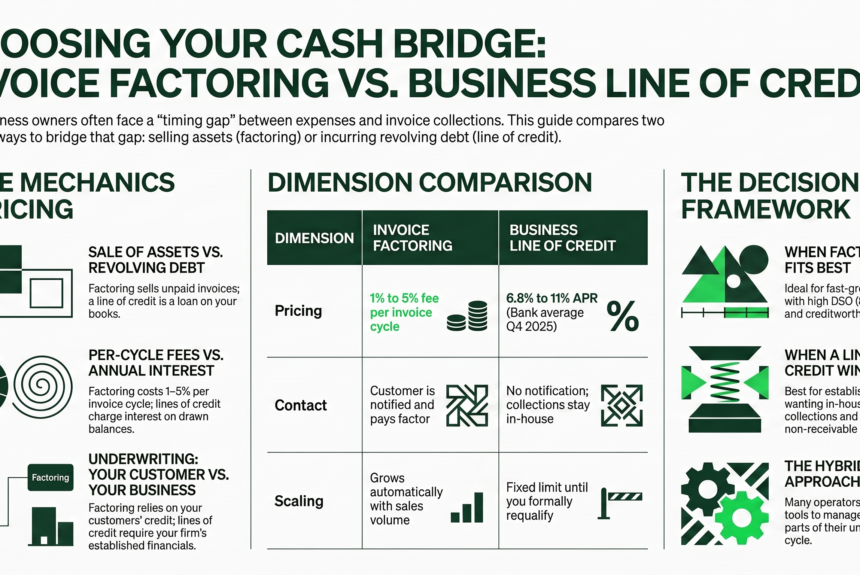
Invoice Factoring vs. a Line of Credit: A Founder’s Guide
You sell on 30, 60, or 90-day terms, the work is good, the customers pay eventually, and yet payroll keeps arriving faster than your collections. Two tools fix that timing gap in very different ways: selling your receivables (invoice factoring) or drawing on a revolving line of credit. Here is how the two actually differ, what each costs, and a clear framework for choosing. If you run a B2B company, your cash problem is rarely about whether the revenue is real. It is about the calendar. Your invoices are sitting in an aging report while suppliers, payroll, and rent run...
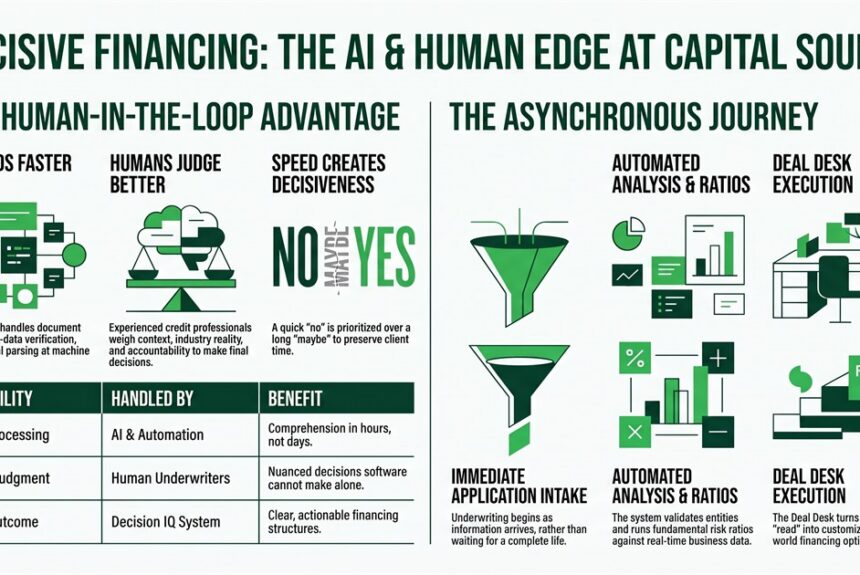
How Capital Source Uses AI to Deliver Faster, Smarter Business Financing Decisions
In commercial finance, the answer is the product. Business owners do not just want capital, they want clarity fast enough to act on it. Here is how Capital Source built its underwriting and execution around decisiveness, and how AI has supercharged a speed advantage we have always held. Ask any operator who has waited three weeks for a financing answer and you will hear the same frustration. The waiting is the cost. A contractor cannot mobilize a crew on a maybe. A distributor cannot commit to an inventory buy on a maybe. A founder cannot sign a lease on a...
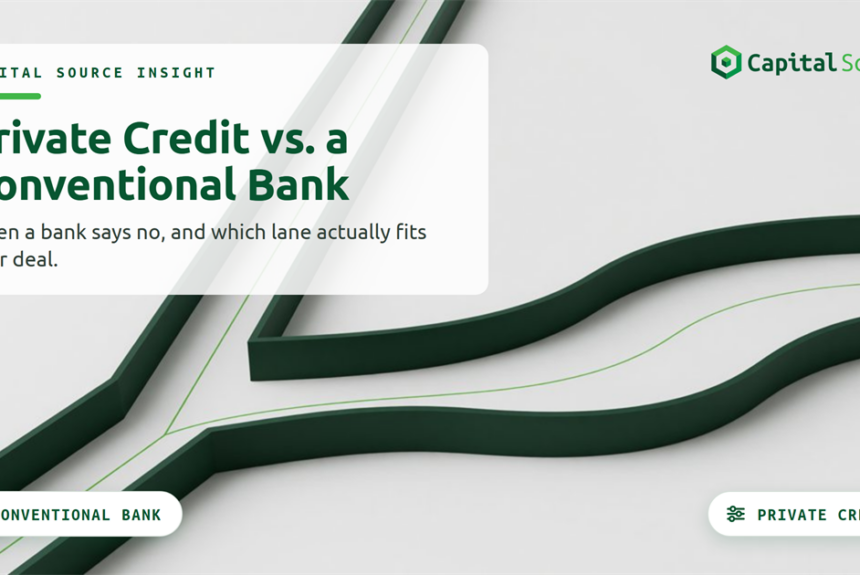
Private Credit vs. a Conventional Bank: When Each One Fits
A conventional bank says no. A private credit fund says yes, but at a higher cost. Neither one is wrong. They are built for different deals, and knowing which one fits yours is half the battle. If you run a lower-middle-market company, you have probably lived this confusion: one lender turns you down while another competes hard to fund you, and nobody quite explains why. The honest answer is that the private credit vs conventional bank decision is not a choice between two versions of the same product. They price risk differently, decide differently, and serve different stages of a...
Why Contractors Turn Down Profitable Work: The Construction Cash-Flow Timing Gap (and How to Close It)
The bid was a winner. The schedule worked. The margin was real. And you still limited what you took on, because the cash to start it was buried in a job you already finished. That is the construction cash-flow timing gap, and it is the most expensive line item that never shows up on a P&L. If you run a commercial construction firm, you already know the feeling. A general contractor calls with a clean scope, a fair number, and a start date you can hit. On paper it is exactly the work you want. Then you do the math...