Every growing company eventually faces the same fork in the road: fund the next phase with debt, with equity, or with something in between. The choice is not about which is “better.” It is about matching the financing to the predictability of the cash flow it funds, and the cost of getting it wrong is...
Author: Capital Source (Capital Source)
Equity VS Debt Financing Borrowing Capacity
Equity vs Debt Financing: Why Borrowing Capacity Should Be Tested Before Selling Ownership A Capital Structure Framework for Matching Debt Capacity, Collateral, Cash Conversion, and Equity to the Right Funding Need Business owners often face the capital question too late. The company needs cash. Growth is available. Inventory must be purchased. A contract must be...
AI Is Rebuilding Professional Services: What It Means for Your Finance Function
Artificial intelligence is quietly rewiring professional services from the inside, and the finance function is near the center of it. Here is what the shift means for how your business runs its numbers, and why the capital partner you choose now matters more than it did a year ago. For most of the last two...
SBA Doubles the Combined 7(a) and 504 Loan Limit to $10 Million: What Capital-Intensive Businesses Should Know
The SBA just doubled how much an owner can borrow across its two flagship programs to $10 million. For capital-intensive operators buying real estate and equipment, the change rewards businesses that structure the two loans together, and it leaves a familiar gap for the cash cycle that neither program is built to cover. If you...
Small Middle Market Financing Capital Stack
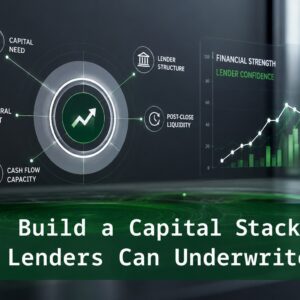
Small Middle Market Financing: Build a Capital Stack Lenders Can Underwrite A practical framework for testing total capital need, required debt, collateral support, operating cash flow, and post-close liquidity before lender outreach. Small and middle market transactions often fail before lender approval, not after it. The failure point is usually the capital stack. The buyer...