The True Cost of a Capital Stack Why PO Financing, ABL, Inventory Advances, and RBF Must Be Measured Together Against Operating-Cycle Revenue This article explains how to calculate the true cost of a capital stack by annualizing PO financing, ABL, inventory advances, and RBF on a consistent basis, weighting each instrument by amount and deployment...

Author: capsource (Jeffrey Heyn)
Capital Stack Financing
Capital Stack Financing: Why Businesses Use the Right Funding Tools in the Wrong Order How PO Financing, ABL, Inventory Financing, and RBF Work Together Across the Operating Cycle The Four-Instrument Capital Stack is not a collection of lending products. It is a governed operating-cycle financing framework that aligns each capital instrument to the phase-specific liquidity...
Compression Scenario Inventory Finance
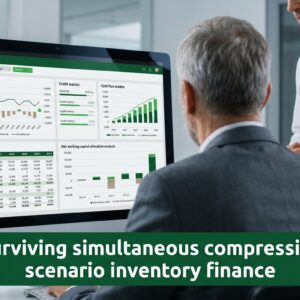
Surviving the Simultaneous Compression Scenario in Inventory Finance How to Govern an Integrated ABL Facility against Real-World Operating Cycle Speed, Depth, and Floor Demands How Inventory Affects NWC Velocity, CCC Timing, and WCC Peak Demand — and Why the Governance Framework Must Account for All Three Simultaneously The NWC-CCC-WCC Governance Trinity operates as a unified,...
Integrated ABL for Inventory and AR Borrowing Base
Integrated ABL Facility for Inventory-Intensive Businesses: Why AR and Inventory Belong in the Same Borrowing Base The Integrated Inventory Borrowing Base and WIP Cost to Complete Discipline — How the Unified Facility Governs What Standalone Inventory Financing Cannot A standalone inventory financing facility has a structural failure that no advance-rate adjustment can solve. When inventory...
Inventory Financing Hardest Asset Class
Inventory Financing: Why It Is the Hardest Asset Class to Lend Against and Why Most Lenders Will Not Try The Three Inventory Types, the Obsolescence Problem, and Why Standalone Inventory Financing Fails Where the Integrated Facility Succeeds KEY POINTS Inventory is the most difficult asset class in commercial lending to advance against correctly. Unlike receivables...