

The Trust Dividend: Structural Advantage in Capital Access and Governance Discipline Architecture of Trust — A Capital Source Governance Framework Introduction Capital markets do not reward stability—they reward demonstrated reliability under instability. As institutional trust degrades, the operating environment does not compress uniformly. It becomes selectively accessible. Capital concentrates. Counterparty networks consolidate. Planning horizons compress unevenly. This divergence is not incidental. It is structural—and cumulative. This final article in The Architecture of Trust series examines the outcome of that divergence: the Trust Dividend—the compounding strategic advantage realized by organizations whose governance architecture held as the Trust Erosion Cycle progressed, while...

Capital Decision Governance During Volatility
Capital Decision Governance During Volatility: Applying the Bulwark Framework Architecture of Trust — A Capital Source Governance Framework Introduction Periods of systemic volatility do more than disrupt markets. They alter the decision environment in which capital is deployed. As transactional signals destabilize, organizations face compressed timelines, uncertain counterparty behavior, and pressure to act quickly on incomplete information. Capital decisions that once unfolded through deliberate planning begin occurring under stress. Article 4 introduced The Bulwark — a governance architecture designed to stabilize capital decision environments during these conditions. Architecture alone, however, does not create strategic advantage. Its value emerges only when...
The Bulwark Governance Framework For Capital Stability
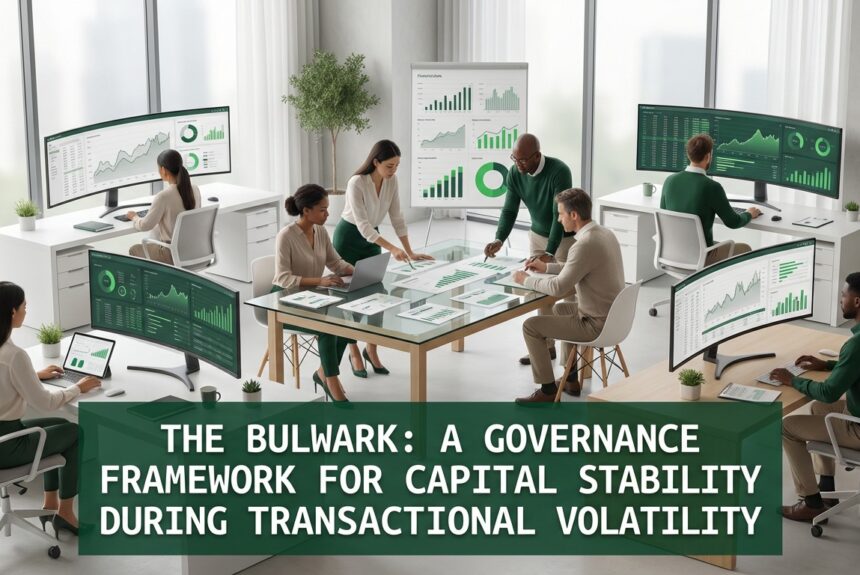
The Bulwark: A Governance Framework for Capital Stability During Transactional Volatility Architecture of Trust — A Capital Source Governance Framework Introduction Transactional systems depend on institutional predictability. When that predictability deteriorates, capital markets do not fail immediately — they reprice trust. Articles earlier in this series examined the mechanisms through which that repricing unfolds: the erosion of the Transactional Social Contract, the progression of the Trust Erosion Cycle, and the emergence of the Bypass Economy that reallocates transactions away from unstable institutions. Once these dynamics begin, organizations face a structural challenge: maintaining capital decision stability while the surrounding transactional environment...
Bypass Economy Trust Breakdown Capital Transactions
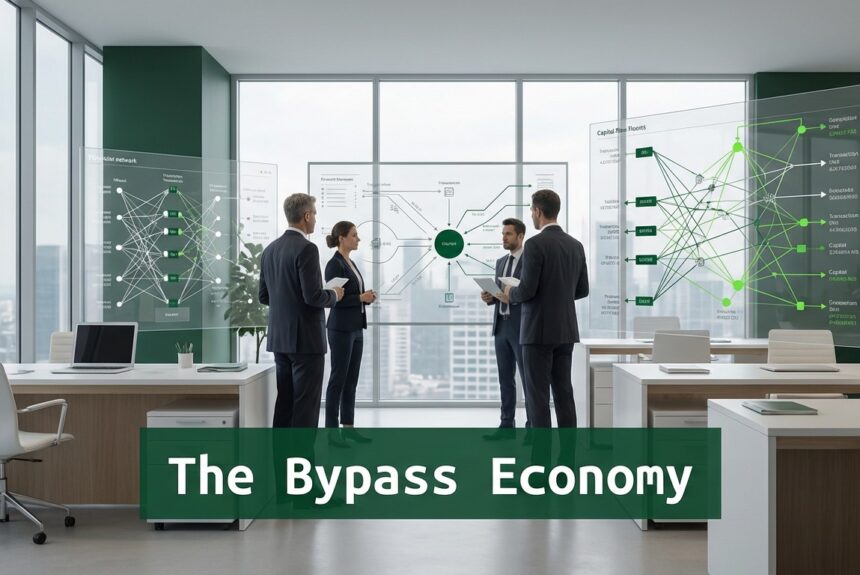
The Bypass Economy: How Trust Breakdown Reshapes Capital Transactions Introduction Modern capital markets operate on a largely unspoken assumption: that the institutional infrastructure supporting transactions will remain reliable. Contracts will be enforceable, counterparties will honor commitments, and the systems governing capital exchange will continue to function predictably. This infrastructure is built on institutional trust. When that trust is stable, transactions move efficiently and capital allocation decisions can extend across long planning horizons. When institutional predictability begins to deteriorate, organizations face a different reality: rising verification costs, tightening capital channels, and growing uncertainty surrounding counterparties. Transactions do not stop in these...

The Mechanics Of Trust Degradation In Capital Markets
The Mechanics of Trust Degradation in Capital Markets: The Trust Erosion Cycle Introduction Trust functions as the transactional protocol of the capital system. When that protocol weakens, liquidity does not disappear immediately — instead, the system begins absorbing a growing Uncertainty Tax. What appears externally as volatility often marks the early phase of a deeper structural process: the degradation of transactional predictability. Trust does not collapse suddenly. It erodes through a measurable sequence that moves gradually from information signals to capital structure constraints. This article examines the Trust Erosion Cycle — the mechanism through which degraded predictability propagates through capital...