
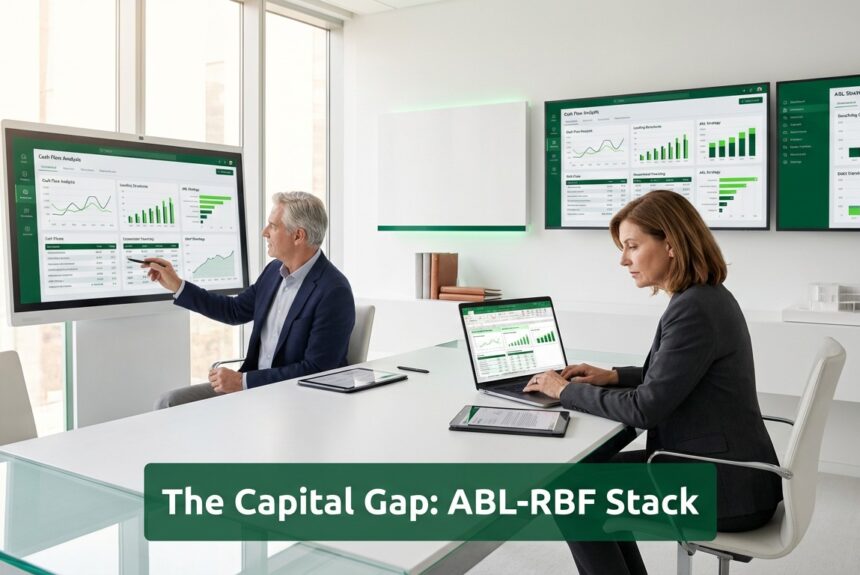
The Capital Gap: How the ABL-RBF Stack Rebuilds Credit Access When Banks Pull Back SERIES CONTEXT This article is the third in a three-part series examining credit tightening mechanics and their structural consequences for SMB capital access. Article One established why institutional credit tightening creates a Why Credit Is Tightening For Small Businesses. Article Two mapped the governance disciplines that determine lender legibility and What Lenders Look For When Credit Tightens. This article delivers the capital structure solution for businesses that have earned the Governance Premium — or are positioned to — but whose conventional credit access remains constrained regardless....

What Lenders Look For When Credit Tightens
The Borrower the Bank Still Wants: What Lenders Look for When Credit Tightens And How Forensic Capital Governance Determines Who Qualifies SERIES CONTEXT This article is the second in a three-part series examining credit tightening mechanics and their structural consequences for SMB capital access. Article One established why credit is tightening at the institutional level and which businesses feel the Credit Availability Gap first. This article maps the specific criteria lenders apply when capital is constrained — and how forensic capital governance disciplines determine which businesses remain legible. Article Three will deliver the capital structure solution. KEY POINTS When institutional...

Why Credit Is Tightening For Small Businesses
Why Credit Is Tightening for Small Businesses — And Which Companies Feel It First Series Context This is the first article in a three-part series on tightening credit conditions and how they affect small and mid-sized businesses. It follows the TLAC Analysis, which explains the regulatory forces shaping bank behavior. This article builds on that foundation and applies it directly to business owners and operators. If you’re arriving here without that context, this article stands on its own. Key Takeaways Credit tightening is not a normal pullback. It is driven by how banks are being forced to allocate capital. Many...

Why Banks Are Tightening Lending And The Hidden Role Of TLAC
Why Banks Are Tightening Lending — And the Hidden Role of TLAC What Middle-Market Companies Need to Know About Shrinking Credit Access Capital Source | Structural Intelligence Series If Your Bank Is Pulling Back, There’s a Structural Reason If your bank has tightened covenants, reduced your borrowing base, shortened your credit facility, or stepped away from your sector entirely, you are not dealing with a temporary lending cycle. You are seeing the effects of a regulatory framework that has changed how large banks allocate capital. That framework is Total Loss-Absorbing Capacity (TLAC). Most business owners and finance leaders feel its...

Architecture Of Trust In Capital Markets
The Architecture of Trust: A Synthesis of Systemic Governance The Bulwark Against Transactional Volatility A Capstone Summary of the Architecture of Trust Series | Capital Source Group Explore the Full Architecture of Trust Series The Transactional Social Contract The Mechanics of Trust Degradation The Bypass Economy The Bulwark Framework Applying the Bulwark The Trust Dividend A Note to Our Readers The Architecture of Trust series moved the lens from the internal engine — audited in the Forensic Audit Series — to the external road. Where the first series asked why capital decisions fail internally, this series asked why the environment...