
Inventory Financing: Why It Is the Hardest Asset Class to Lend Against and Why Most Lenders Will Not Try The Three Inventory Types, the Obsolescence Problem, and Why Standalone Inventory Financing Fails Where the Integrated Facility Succeeds KEY POINTS Inventory is the most difficult asset class in commercial lending to advance against correctly. Unlike receivables — which represent a completed sale against a creditworthy buyer — inventory must still be sold, invoiced, and collected before it retires the advance. That additional conversion sequence is where most standalone inventory financing structures fail. The three inventory types — manufacturing, distribution, and retail...
ABL Void SMB Lending
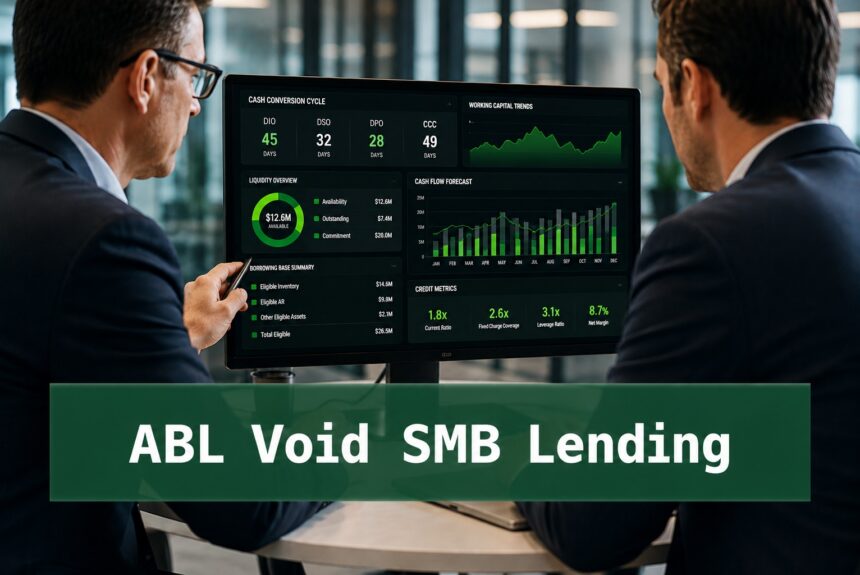
Capital Structure and the ABL Void: Why Regional Banks Are Exiting Complex SMB Borrowers How the ABL Void, the NWC-CCC-WCC Governance Trinity, and the Forensic ABL Framework Form a Unified Capital Governance Architecture SERIES CONTEXT This article serves as the capstone of Book Three of the Capital Governance Stack series — the structural prescription volume built around the capital structure failures now reshaping the lower middle market. Book One established the forensic diagnostic framework. Book Two established the capital governance framework. Book Three applied both systems directly to facility design — establishing the ABL Void diagnosis, the NWC-CCC-WCC Governance Trinity,...
NWC CCC WCC ABL Facility Sizing
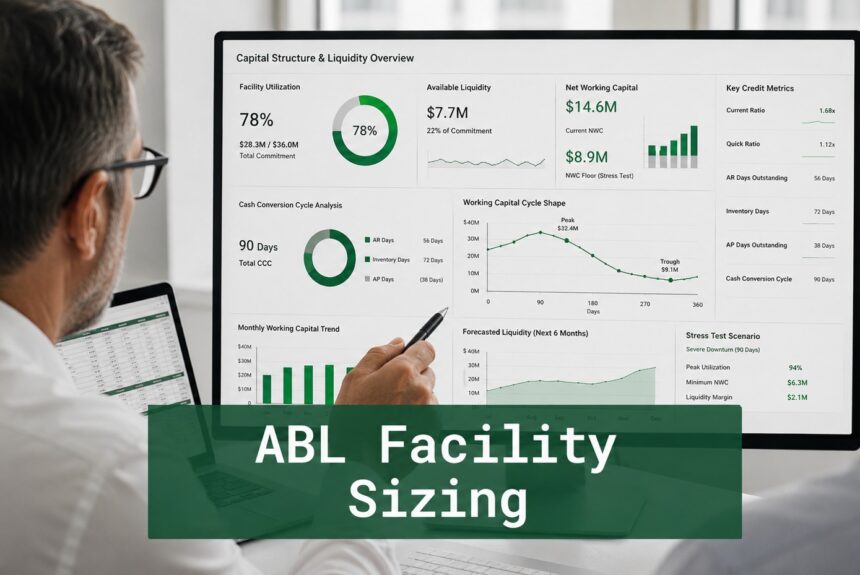
NWC, CCC, and WCC: Why Working Capital Variables Must Be Measured Together How the Operating Cycle Trinity Produces Accurate ABL Facility Design The Operating Cycle Trinity is a forensic working-capital framework that evaluates three interdependent variables simultaneously: NWC floor sustainability, cash conversion timing, and peak working-capital demand shape. Together, these measurements determine whether an ABL facility is structurally aligned to the operating cycle the business actually operates under rather than the one historical underwriting assumptions projected. SERIES CONTEXT This article is the capstone of the NWC-CCC-WCC Governance Trinity Series — a three-part series developing the operating cycle variables that determine...
ABL RBF Stack Working Capital Beyond Borrowing Base
ABL-RBF Stack: Structuring Working Capital Beyond the Borrowing Base How ABL and Revenue-Based Financing Should Be Sequenced Across the Operating Cycle SERIES CONTEXT This article is the third and final article in the Forensic ABL Framework and ABL-RBF Stack Series — a three-part series presenting a complete capital structure framework for the businesses the regional bank market continues to exit. It is published on the Capital Source thought-leadership platform for financially literate SMB operators, CFOs, founders, and business owners. Article One established the Forensic ABL Facility as a facility-design discipline built on three simultaneous inputs. Article Two developed the CCC-Adjusted...
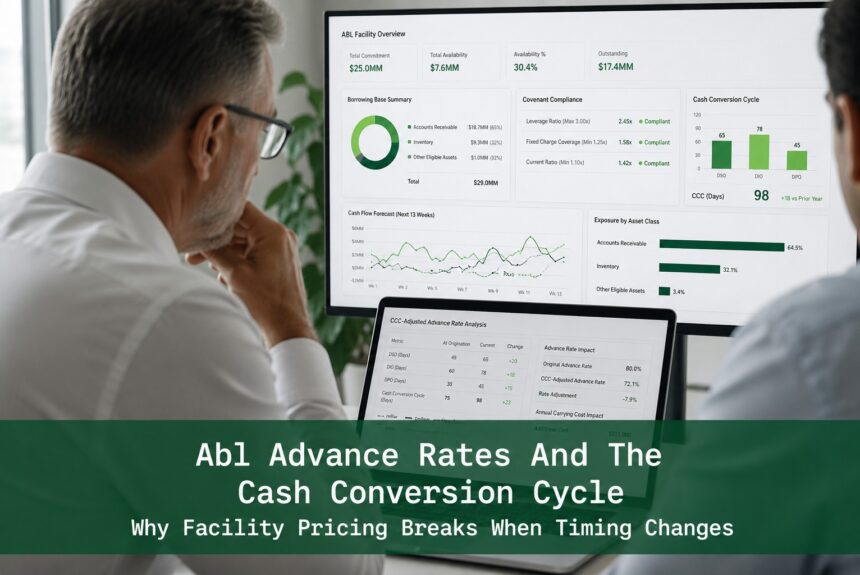
ABL Advance Rates And The Cash Conversion Cycle
ABL Advance Rates and the Cash Conversion Cycle: Why Facility Pricing Breaks When Timing Changes How Advance Rate Recalibration Against Current Cash Conversion Timing Corrects the Hidden Pricing Misalignment in Most ABL Facilities SERIES CONTEXT This article is the second in the Forensic ABL Framework and ABL-RBF Stack Series — a three-part series delivering the complete capital structure solution for the businesses the regional bank market is exiting. It is published on the Capital Source thought-leadership platform for financially literate SMB operators, CFOs, and business owners. Article One established the Forensic ABL Facility as a design discipline built on three...