
Section 179 Deduction 2026: The Install Date Is What Counts
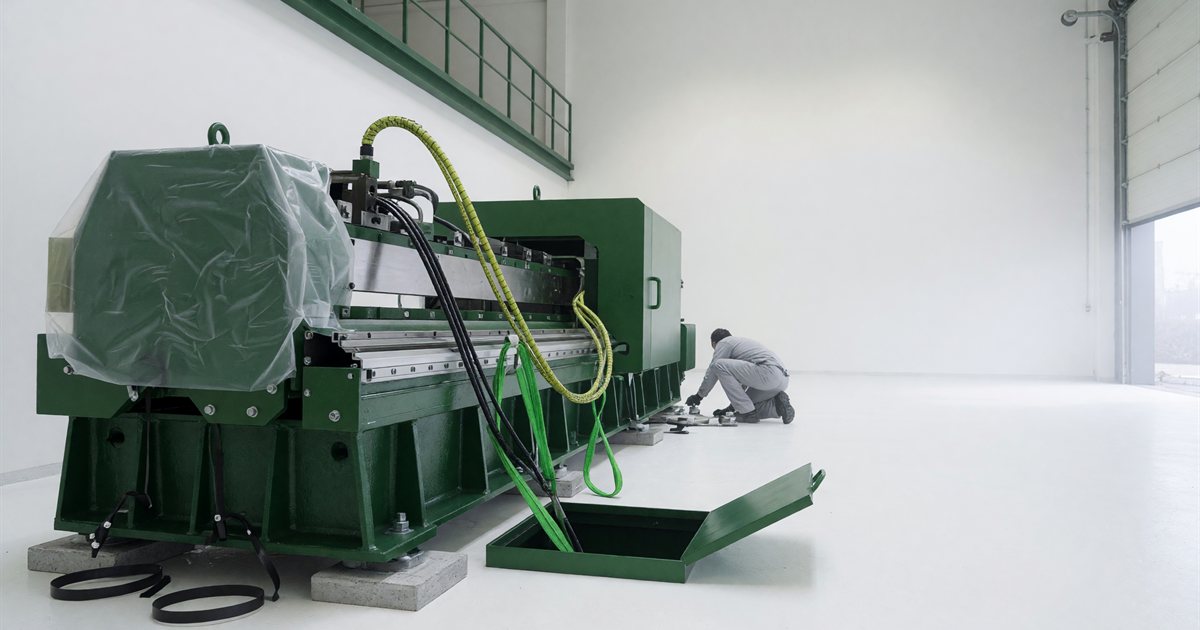
The test is not when you ordered the equipment, or paid for it, or took delivery. It is whether the asset was ready and available to do its job. That distinction decides which tax year your deduction lands in, and it moves the real deadline months earlier than the calendar suggests.
Section 179 of the Internal Revenue Code lets a business deduct all or part of the cost of qualifying property in the year the property is placed in service, up to an annual limit, instead of recovering that cost through depreciation over several years (IRS Publication 946). Qualifying property is mostly the tangible equipment a business runs on: machinery, vehicles, office equipment, off-the-shelf software, and certain improvements to nonresidential buildings, such as roofs, HVAC, fire protection and security systems. It must be purchased for use in the business (property received as a gift or inheritance, or bought from a related person, does not qualify) and used more than 50% for business. That makes Section 179 most relevant to owner-operators whose growth runs on equipment: contractors adding machines, manufacturers replacing production lines, trucking and logistics companies renewing a fleet, farms and ranches, medical and dental practices upgrading equipment, and restaurants refitting a kitchen. For those businesses the deduction can move years of depreciation into a single tax year, which is why the date the equipment goes into service matters as much as the price.
Capital Source is not a tax firm and nothing here is tax advice. The figures and rules below come from the IRS, and how any of them apply to your business is a question for your CPA. What follows is the timing mechanic, because that is the part that interacts with how you fund an acquisition, and it is the part most often explained wrong.
What does “placed in service” actually mean for Section 179?
The IRS states the test plainly in Publication 946:
“You place property in service when it is ready and available for a specific use, whether in a business activity, an income-producing activity, a tax-exempt activity, or a personal activity.” And, in the same publication, “Even if you are not using the property, it is in service when it is ready and available for its specific use.” (IRS Publication 946.)
Readiness is the test, rather than utilization, payment or delivery.
The IRS then supplies the example that carries the whole argument:
“You bought a machine for your business. The machine was delivered last year. However, it was not installed and operational until this year. It is considered placed in service this year.”
That is the failure mode, described by the IRS itself. Bought and delivered in one tax year. Deductible in the next. Nothing went wrong, no election was missed, and the deduction still moved twelve months.
The election itself is tied to the same date: Section 179 is claimed in the tax year in which the property is placed in service, not the year it was purchased or paid for.
What are the Section 179 limits for 2026?
For tax years beginning in 2026, from the IRS revenue procedure that sets them:
| Item | 2026 figure |
|---|---|
| Maximum Section 179 expense deduction | $2,560,000 |
| Phase-out threshold (cost of property placed in service) | $4,090,000 |
| Sport utility vehicle sub-limit | $32,000 |
Source: Rev. Proc. 2025-32, section 4.24, corroborated in the Instructions for Form 4562. Figures are for tax years beginning in 2026; fiscal-year filers differ.
Notice how the statute words the phase-out. The $2,560,000 limit is reduced by the amount by which the cost of Section 179 property placed in service during the year exceeds $4,090,000. Even the dollar mechanics run on the placed-in-service concept rather than on purchasing.
Two constraints belong next to those numbers, because they surprise people.
The phase-out is cumulative across the year. An operator replacing several units across a fleet can approach the threshold in aggregate without any single purchase looking large.
Section 179 cannot create a loss. Publication 946 provides that the deduction cannot exceed taxable income from the active conduct of a trade or business during the year, with disallowed amounts carried over. This is the second most common misunderstanding after placed-in-service, and it is worth raising with your CPA before you plan around a number.
How do bonus depreciation and Section 179 work together in 2026?
One hundred percent bonus depreciation is back and permanent. The One Big Beautiful Bill Act replaced the scheduled phase-down with a permanent 100% additional first-year depreciation deduction for qualified property acquired after January 19, 2025, with guidance issued in Notice 2026-11 (January 14, 2026).
The two provisions are not interchangeable. Section 179 is elective, capped, and limited by business income. Bonus depreciation is the default, uncapped, and can create a loss. Ordering and interaction are a CPA question.
The consequence for timing runs opposite to intuition.
Why the date matters more, not less
With 100% bonus permanently available, the amount riding on the placed-in-service date is the full cost of the asset. The larger the deduction at stake, the more expensive it is to miss the year by a week.
One watch-out for long-lead orders: property is not treated as acquired after the effective date if a written binding contract for its acquisition existed on or before that date.
Does equipment you finance or lease qualify for Section 179?
This is the question most of our readers face, and the honest answer is that it depends on what the agreement is, not on what it is called.
Section 179 property must be acquired by purchase. So the threshold question, in the IRS’s own framing, is whether your agreement is a lease or a conditional sales contract. The IRS is direct about the difficulty: the determination turns on the intent of the parties as evidenced by their agreement, read against the facts at inception, and “no single test, or special combination of tests, always applies.”
The IRS lists conditions indicating a conditional sales contract, meaning a purchase rather than a lease (IRS Small Business FAQ, citing Rev. Rul. 55-540):
- Part of each payment is applied toward an equity interest.
- Title passes on payment of a stated amount of “rental” payments.
- The amount paid for short-term use is an inordinately large part of the amount needed to get title.
- Payments materially exceed current fair rental value.
- There is a purchase option at a nominal price relative to value at exercise.
- There is a purchase option for a small amount relative to total payments.
- Payments designate a portion as interest.
Broadly, and subject entirely to your advisor’s read of your documents: an equipment loan or finance agreement makes the business the owner from the outset. A nominal-option lease tends to look like a conditional sales contract. A true fair-market-value operating lease is generally a lease, where the lessee deducts rent and the lessor holds the depreciable interest.
The sentence worth carrying away is narrow and defensible: the deduction attaches to the asset being placed in service, not to the business having paid cash for it. How your particular agreement is characterized is your CPA’s call, not ours.
How far before December 31 do you need to act?
Far enough that the machine is ready and available, which is not a date we can give you and is not December 31.
The Institute for Supply Management tracks the weighted average commitment lead time for capital expenditures among manufacturers.
Capital expenditure commitment lead time was 175 days in October 2026, with the ISM Supplier Deliveries Index at 59.1%, a reading above 50 that signals deliveries are getting slower (ISM Manufacturing Report on Business, October 2026, released November 2, 2026).
One hundred seventy-five days is nearly six months. Counted back from December 31, that lands in early July, and it measures only the commitment lead time. It does not include rigging, installation, power, commissioning, or any inspection or certification your asset needs before it is ready and available.
So do the subtraction for your own asset class rather than taking a generic date from anyone. A CNC cell needing foundation work and a power drop is a different problem from a truck needing an upfit, which is a different problem again from a piece of imaging equipment requiring calibration and sign-off.
If you are reading this in November or December, the arithmetic changes the question. Equipment ordered now on a typical capital lead time will most likely be placed in service in 2027, and the deduction will follow it into that tax year. For 2026, what can still count is equipment that is already delivered, or in stock with a dealer, and can be installed and made ready and available before December 31. Missing the date generally moves the deduction into the next tax year rather than eliminating it, so the useful question is which year you want it in and what the purchase does to your cash. Confirm the timing for your specific asset with your tax advisor, and note that fiscal-year filers run on their own year-end.
Demand is not making the queue shorter. Equipment finance new business volume reached $14.3 billion in July 2026, up 34.3% from June, with year-to-date volume up 16.8% over the same period in 2025 (ELFA CapEx Finance Index, July 2026, released August 25, 2026).
And approval is not a formality. In that same record month, the credit approval rate eased 2.1 percentage points to 77.4%. Roughly one application in four did not get there.
What this means for how you fund the purchase
Q4 carries a built-in tension. A deduction reduces taxable income. It does not produce cash. Paying cash for a large asset to capture a deduction drains working capital in the same quarter as your inventory build and your stretched receivables, which is why the tax answer and the cash answer are not the same answer.
The form of the acquisition is one of the few variables you control, and it interacts with both. Capital structured around your cash cycle can let the equipment go into service without the Q4 drain that a cash purchase creates. Whether a given structure is a purchase or a lease for tax purposes belongs to your CPA, and we would rather you ask them early than discover it in March.
Plan the date, not the deadline
If a Q4 capital decision is sitting on your desk, the question worth working through is when the asset can realistically be ready and available, and what funding it does to your cash position in the same quarter. Tell us what you are buying and how your year runs.
Key takeaways
- The IRS test is readiness: property is placed in service when it is ready and available for its specific use, even if it is not yet being used.
- The IRS’s own example has a machine delivered in one tax year and placed in service the next, which moves the deduction a full year.
- For tax years beginning in 2026: $2,560,000 deduction limit, $4,090,000 phase-out threshold, $32,000 SUV sub-limit.
- Section 179 cannot exceed taxable income from the active conduct of a trade or business, and the phase-out is cumulative across the year.
- 100% bonus depreciation is permanent for qualified property acquired after January 19, 2025, which raises rather than lowers the cost of missing the placed-in-service date.
- Capital expenditure commitment lead time averaged 175 days in October 2026 and supplier deliveries were still slowing, so for a new order the practical deadline sat in early July. Late in the year, only equipment already delivered or in stock, and ready for use by December 31, can realistically count for 2026.
Frequently asked questions
What does placed in service mean for Section 179?
Under IRS Publication 946, property is placed in service when it is ready and available for a specific use. The publication adds that even if you are not using the property, it is in service when it is ready and available for its specific use. The test is readiness rather than purchase, payment, delivery or actual use.
What is the Section 179 deduction limit for 2026?
For tax years beginning in 2026 the maximum Section 179 expense deduction is $2,560,000, reduced dollar for dollar by the amount by which the cost of Section 179 property placed in service during the year exceeds $4,090,000. The sport utility vehicle sub-limit is $32,000. Fiscal-year filers differ, and your own position should be confirmed with your CPA.
Can I still deduct equipment if I finance it?
Section 179 property must be acquired by purchase, so the question is whether your agreement is a lease or a conditional sales contract. The IRS decides that on the intent of the parties as evidenced by the agreement, and states that no single test always applies. The deduction attaches to the asset being placed in service rather than to the business having paid cash for it, but characterization of a specific agreement is a question for your tax advisor.
What happens if my equipment is not ready until January?
It is placed in service in the following tax year, and the deduction moves with it. The IRS gives exactly this example: a machine delivered in one year but not installed and operational until the next is considered placed in service in the later year. Delivery before December 31 does not by itself secure the earlier year.
Does 100% bonus depreciation replace Section 179 in 2026?
No, they are separate provisions that interact. The One Big Beautiful Bill Act made 100% bonus depreciation permanent for qualified property acquired after January 19, 2025. Section 179 is elective, capped and limited by business income, while bonus depreciation is the default, uncapped and can create a loss. Which applies and in what order is a question for your CPA.
Sources
- IRS Publication 946, How To Depreciate Property (what the Section 179 election does, qualifying property and business-use test, placed-in-service definition, examples, business income limitation).
- IRS Rev. Proc. 2025-32, section 4.24 (2026 Section 179 dollar limits).
- IRS Instructions for Form 4562.
- IRS Notice 2026-11 (permanent 100% bonus depreciation guidance, January 14, 2026).
- IRS Small Business FAQ, lease versus conditional sales contract, citing Rev. Rul. 55-540.
- ISM Manufacturing Report on Business, October 2026 (released November 2, 2026).
- ELFA CapEx Finance Index, July 2026.
Tax figures are for tax years beginning in 2026 and were checked against the IRS sources above as of November 2026. Capital Source is not a tax, accounting or law firm, and nothing in this article is tax, accounting or legal advice. Section 179 and depreciation outcomes are fact-specific, many states decouple from federal treatment, and whether a particular agreement is a purchase or a lease is determined on its own documents. Confirm everything here with your own CPA or tax advisor before acting. Nothing here is a commitment to arrange or provide financing, or an indication of approval, pricing, structure or timing. Capital Source is the brand of Capital Source Group, LLC, which arranges financing provided by lenders, including our affiliate Stretch Finance, LLC. Any financing is subject to the lender’s underwriting, diligence and definitive documentation.
Leave a Reply