
Financing a 3PL: Working Capital for Warehousing and Fulfillment Operators
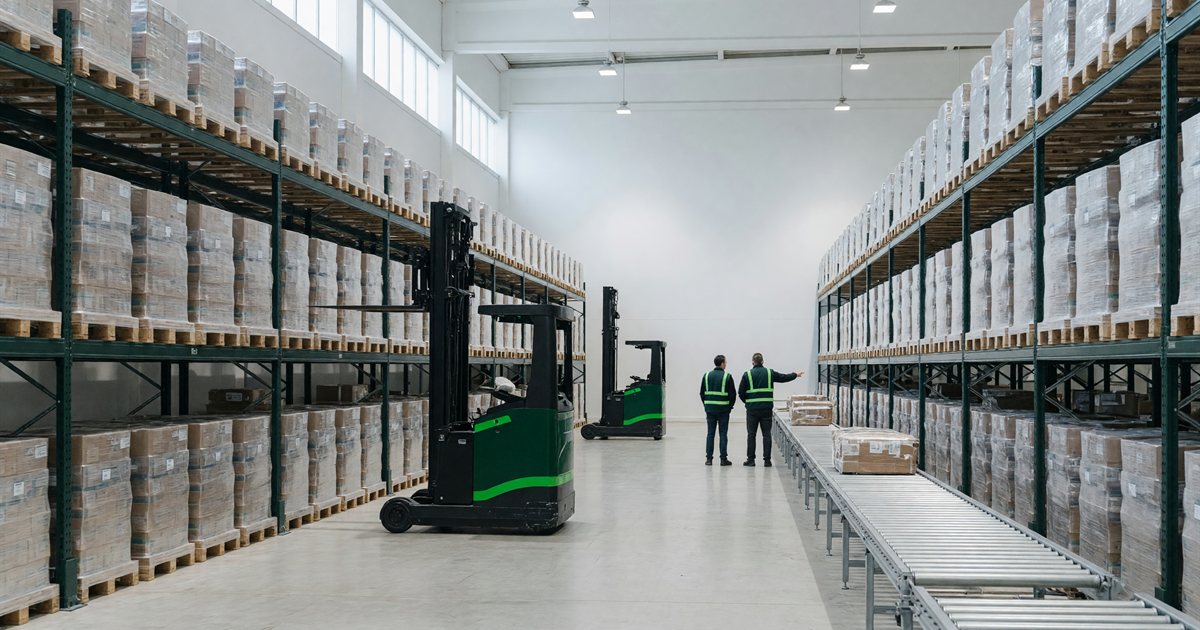
Your building is full of inventory and almost none of it is yours. That one fact decides what you can borrow against, and most financing conversations get it wrong in the first ten minutes.
Here is something nobody tells 3PL operators until it has already cost them money.
A distributor and a 3PL can run identical buildings. Same racking. Same forklifts. Same volume through the dock doors. Put their balance sheets side by side and they are not remotely the same credit. The distributor owns what is on the shelves. You are holding it for somebody else.
That is not a technicality. It decides which structures are open to you, and it is why most lenders will like your revenue and still come back with less availability than you expected.
What makes financing a 3PL different from financing a distributor?
Ownership. That is the whole answer.
A distributor’s inventory is an asset it can pledge. Your inventory belongs to your clients. It earns you storage and handling revenue. It gives you no borrowing capacity at all.
And this is not most lenders being awkward. It is written into bank examination guidance. The Office of the Comptroller of the Currency, in its Comptroller’s Handbook on Asset-Based Lending, addresses the closest analogue directly:
“Consignment goods are considered ineligible because they are owned by another party.”
OCC Comptroller’s Handbook, Asset-Based Lending, Version 1.1
The word there is consignment, and a warehousing agreement is not the same legal instrument. But the reason travels: ineligibility follows ownership. Goods you hold and do not own stay out of a borrowing base no matter what the paperwork calls the arrangement.
So the largest thing in your building, by volume and by insured value, contributes nothing to your credit availability. That is worth reading twice, because plenty of operators build a growth plan as though it were not true.
Once that lands, the picture gets simple. You borrow against two things: the invoices you issue, and the equipment you actually own.
Where does a 3PL’s cash actually get tight?
In the gap between paying your people and getting paid by your clients. Labor runs weekly or biweekly. Client invoices run monthly on net terms. That gap is structural, not occasional, and it gets wider exactly when you are winning.
Three moments put the most pressure on it:
- Onboarding a new client. Racking gets reconfigured, slotting gets designed, the WMS gets integrated, staff get hired and trained. All of it happens before the first invoice goes out, and a large new account can consume more cash arriving than it does running.
- Peak season. Q4 volume requires headcount in place in advance. You are paying for labor against volume you have not yet billed, and the receivable from that volume lands well after the temporary payroll clears.
- Automation. Conveyors, sortation, goods-to-person systems and robotics are capital projects with long payback periods, funded from a business whose cash is already committed to payroll.
That last one is no longer optional, and the public data shows why. The U.S. Census Bureau’s Quarterly Services Survey put transportation and warehousing revenue at $409.3 billion for the second quarter of 2026, up 12.1 percent from the same quarter of 2025 (not adjusted for seasonal variation or price changes). Over almost exactly the same window, Bureau of Labor Statistics data for warehousing and storage employment went the other way: 1,869,300 jobs in July 2025 down to 1,834,600 in July 2026, a loss of about 34,700 positions.
Sector revenue up 12.1 percent year over year while warehousing and storage employment fell by roughly 34,700 jobs. The growth is not being carried by headcount.
Treat those two figures as neighbors, not as one statistic. The revenue number covers transportation and warehousing together and is unadjusted. The employment series is warehousing and storage specifically, seasonally adjusted. Different scopes, same direction of travel. More throughput, fewer people. That productivity is being bought, and buying it is a financing decision.
What can a 3PL actually borrow against?
Two categories. Draw the line yourself, before most lenders draw it for you.
| What is in the building | Whose is it | Does it support credit |
|---|---|---|
| Client invoices (receivables) | Yours | Yes. The primary engine of a 3PL facility. |
| Forklifts, racking, conveyors, sortation, robotics | Yours, if owned outright | Yes. Financeable as equipment, subject to existing liens. |
| The WMS and IT stack | Yours, often licensed | Rarely. Licensed software is not usually pledgeable collateral. |
| Client inventory on your racking | Your clients’ | No. Ineligible because it is owned by another party. |
| Goods in transit you are handling | Your clients’ | No, for the same reason. |
| The building | Usually leased | Only if you own it. A lease is an obligation, not collateral. |
| Packaging and consumables you buy | Yours | Sometimes, though typically too small to matter. |
Read down the “whose is it” column and the problem is obvious. The most valuable contents of your warehouse sit in the wrong rows. Which means your receivables carry more weight in your financing than they would in almost any other business your size, and the quality of those receivables deserves the same attention you give your income statement.
Why client concentration hits 3PLs especially hard
Because 3PLs get built on a few big accounts, and because receivables are doing most of the collateral work. Concentration compounds here in a way it never would for a business with inventory to fall back on.
The OCC guidance sets out the mechanics. A bank “normally considers receivables to be concentrated if there are single accounts representing 10 percent or more of the total receivables portfolio,” and a bank lending to a borrower with a concentrated customer base “should limit concentrated accounts to no more than 10 percent to 20 percent of the receivables borrowing base.” Run that against your own book. If one retailer is 35 percent of your billings, a 20 percent cap means part of your best-paying receivable stops counting toward availability. Not because that client is bad. Because it is big.
Two further eligibility rules deserve attention in this industry specifically. Cross-aging makes all of a customer’s receivables ineligible when a set proportion of that customer’s balance goes delinquent, so one slow-paying anchor client can remove its entire balance from your base at once. And contra-accounts, where the same party is both customer and supplier, appear more often in logistics than people expect, since freight, drayage and returns processing can flow in both directions with the same counterparty.
What do most lenders want to see from a 3PL?
The operators who get through underwriting fastest have already done the separating themselves. Bring these six things and you are answering the questions before anyone asks them.
- Client contracts, with terms and minimums. Contracted volume with stated minimums reads very differently from month-to-month handshake arrangements, because it speaks directly to whether the receivable stream persists.
- An aging by client, with the concentration named. Do not make anyone discover it. Name your largest account, its share, and its payment history.
- An equipment schedule that distinguishes owned from leased and lists existing liens. This is the other half of your borrowing capacity and it is frequently presented as a single undifferentiated number.
- A clean line between owned and custodial assets. An operator who presents client inventory as a company asset invites doubt about everything else on the schedule.
- Your warehousing agreements, specifically the loss and liability terms. Who bears the risk on stored goods is a credit question, not just an insurance one.
- Billing adjustment history. Chargebacks, service credits and rebilling all show up as dilution, and dilution feeds advance rates.
Where does financing fit?
Here is where most lenders stop, and where structure starts to earn its keep.
Your two borrowable categories behave nothing alike. Receivables turn over in weeks. Equipment holds its value over years. Most lenders treat that as two separate problems for two separate providers: a factoring company for the invoices, an equipment lender for the lift trucks. Two applications. Two sets of covenants. Two people who each see half your business.
That split works fine right up until concentration bites. When a single-account cap trims your receivables base, a receivables-only provider has nothing else to look at. Your availability falls even though you own a building full of racking, conveyors and forklifts free and clear. The equity is sitting right there. It is just in the wrong silo.
Through Capital Source’s Deal Desk, rapid underwriting, and placement process, we take a holistic approach to structuring the right deal. We leverage an extensive financing arsenal from our affiliate, Stretch Finance, alongside our platform of banks and private credit funds, to deliver the ultimate solution for 3PLs. That range is the point. It is what lets us underwrite your whole asset mix rather than the one slice a single provider is set up to lend against, and it is why the first question from our Deal Desk is what you own, not which product you came in asking for. Availability, structure and terms are subject to review and underwriting, and nothing here is an offer. What does not change is where the review starts. We fund across the logistics sector, including freight and trucking operators, and you can see the wider set of sectors on our industries we fund page.
Tell us what you own, not just what you handle
Most 3PL financing conversations stall because nobody separated the owned assets from the custodial ones. Bring an aging by client and an equipment schedule, and we can talk about your structure specifically instead of your industry generally.
Key takeaways
- Client inventory is not collateral. Bank guidance excludes goods “owned by another party,” so the most valuable contents of your warehouse generate storage revenue and no borrowing capacity.
- Receivables and owned equipment are the two engines. Everything else in the building is either someone else’s or not pledgeable, which puts unusual weight on the quality of your client invoices.
- The squeeze is structural, not seasonal. Weekly or biweekly labor against monthly client invoicing on net terms produces a gap that widens as you grow, and widens most when you onboard.
- Growth is being bought with capex. Sector revenue rose 12.1 percent year over year while warehousing and storage employment fell by about 34,700 jobs, and a receivables line does not fund automation.
- Concentration compounds here. With receivables carrying most of the collateral load and 3PLs often built on a few anchor accounts, single-account caps and cross-aging bite harder than in an inventory-rich business.
- Do not let your two engines get financed separately by default. Receivables and owned equipment can be looked at together in one structure, which matters most in exactly the spot 3PLs land in: a receivables base narrowed by client concentration while the forklifts and racking sit owned free and clear.
- Separate owned from custodial before you apply. Presenting that line clearly is the single fastest way to a credible conversation.
Frequently asked questions
Can a 3PL borrow against the inventory in its warehouse?
Generally no, because that inventory belongs to its clients. Bank examination guidance treats goods held but not owned as ineligible collateral, stating that consignment goods are ineligible “because they are owned by another party,” and the reason follows ownership rather than the label on the arrangement. A 3PL’s borrowing capacity therefore rests on its client receivables and on equipment it owns outright.
What financing do warehousing and fulfillment operators typically use?
Most commonly a combination: receivables financing or invoice factoring to bridge the gap between paying labor weekly or biweekly and collecting client invoices on monthly net terms, plus equipment financing for racking, forklifts, conveyors, sortation and robotics so that automation is funded over the asset’s life rather than out of working capital. Asset-based lending can combine owned equipment and receivables in a single facility.
Why is client concentration a bigger problem for a 3PL?
Because receivables are doing most of the collateral work, there is no inventory to fall back on when a concentration limit reduces availability. Bank guidance normally treats a single account at 10 percent or more of total receivables as a concentration and directs lenders to cap concentrated accounts at 10 to 20 percent of the receivables borrowing base. 3PLs are frequently built on a few large accounts, so those caps apply directly.
When is a 3PL’s cash position tightest?
Usually during client onboarding and peak season. Onboarding requires racking changes, slotting design, systems integration and hiring before the first invoice is issued, so a large new account can consume more cash arriving than it does running. Peak season requires headcount in place ahead of volume, meaning temporary payroll clears well before the receivable from that volume is collected.
Can a 3PL finance receivables and equipment together?
Yes. That is what an asset-based or cross-collateralized structure is for. Instead of running a receivables facility with one provider and an equipment facility with another, both asset categories are considered in a single structure. For a 3PL this matters more than it does for most businesses, because a single-account concentration cap can narrow the receivables base while the operator still holds real equity in owned racking, forklifts and conveyors. Whether it is available in any particular case depends on the assets, the contracts and underwriting.
Sources
- Office of the Comptroller of the Currency, Comptroller’s Handbook: Asset-Based Lending (Version 1.0 March 2014; Version 1.1 January 27, 2017). Ineligible collateral, consignment, concentration limits, cross-aging and contra-accounts.
- U.S. Census Bureau, Quarterly Selected Services Estimates, Second Quarter 2026, Advance Report (Release CB26-139, August 20, 2026). Transportation and warehousing revenue $409.3 billion, up 12.1 percent year over year, not adjusted for seasonal variation or price changes.
- U.S. Bureau of Labor Statistics, All employees, thousands, warehousing and storage, seasonally adjusted (series CES4349300001). 1,869,300 in July 2025; 1,834,600 in July 2026.
This article is for informational and educational purposes only and does not constitute financial, investment, accounting, tax, or legal advice. The collateral eligibility principles, concentration thresholds, and borrowing-base mechanics described here are drawn from published supervisory guidance for national banks and are general in nature; they are not Capital Source criteria, offers, or terms, and no approval, rate, structure, or outcome is implied. Whether a particular asset is pledgeable depends on your contracts, your jurisdiction, and the facts of your arrangement, and should be reviewed with qualified legal and accounting professionals. Capital Source provides access to commercial financing solutions through its affiliates, syndicates, network of banks, lending partners, and private credit funds/groups. Availability, approval, funding amount, structure, and terms are subject to business review, underwriting, and lender approval.