Working Capital Cycle Explained: How DIO, DSO, and DPO Turn EBITDA into Real Cash for Loans
Your business doesn’t run on profits—it runs on how fast cash flows through inventory and receivables. Here’s how the working capital cycle determines real liquidity and borrowing power.
Key Takeaways
- Cash, not profit, drives financial health. The speed of cash movement through inventory, receivables, and payables determines true liquidity.
- The Cash Conversion Cycle (CCC) shows how long cash is tied up before it’s available again.
- CCC = DIO + DSO – DPO: Shorter cycles strengthen cash flow; longer ones strain it.
- Even profitable firms can be cash-poor if money stays trapped in stock or unpaid invoices.
- Optimizing the cycle through better inventory, collections, and payment strategies improves borrowing capacity and repayment strength.
Introduction
Profits are great, but they don’t pay suppliers or lenders—cash does. The working capital cycle determines whether your EBITDA becomes usable cash or stays trapped in inventory and unpaid invoices. Every business converts cash into goods or services, collects payment, and repeats the process. The faster this cycle runs, the stronger your liquidity. This article explains the cash conversion cycle (CCC), breaks down its components—DIO, DSO, and DPO—and shows how they influence your ability to borrow safely.
Understanding the Cash Conversion Cycle (CCC)
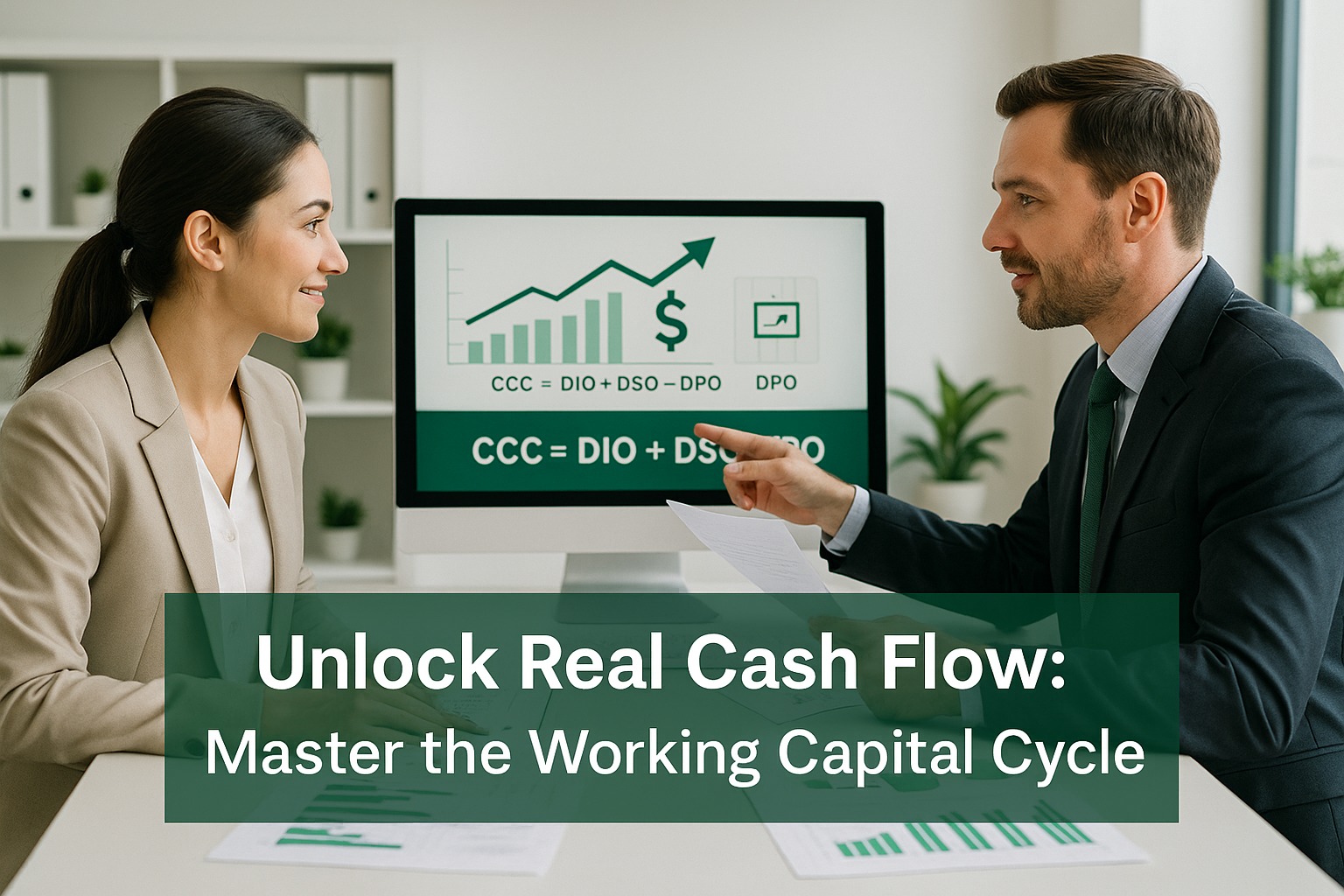
The Cash Conversion Cycle measures how long cash is tied up before returning to your account.
CCC = DIO + DSO – DPO
| Component | Definition | Impact on Cash |
|---|---|---|
| DIO (Days Inventory Outstanding) | How many days it takes to sell inventory | Longer DIO traps cash in stock |
| DSO (Days Sales Outstanding) | How long customers take to pay invoices | Longer DSO delays inflows |
| DPO (Days Payables Outstanding) | How long you can wait to pay suppliers | Longer DPO preserves cash |
A shorter CCC means faster cash flow and greater flexibility to pay expenses or service debt. A long CCC can leave even profitable businesses struggling for liquidity.
A Real-World Example
Imagine a wholesale business that spends $1 million on inventory.
| Metric | Value |
|---|---|
| DIO | 90 days (to sell inventory) |
| DSO | 45 days (customers pay after delivery) |
| DPO | 30 days (suppliers are paid) |
CCC = 90 + 45 – 30 = 105 days
Your cash is locked up for over three months. If loan payments of $50,000 per month start immediately, you’ll be paying before collecting. This is why strong profits mean little if cash is trapped in operations.
| Stage | Cash Impact | Timing |
|---|---|---|
| Buy Inventory | –$1,000,000 | Day 0 |
| Sell Inventory | $0 (waiting) | Day 90 |
| Collect Payments | +$1,000,000 | Day 135 |
| Pay Suppliers | –$1,000,000 | Day 30 |
| Net Cash Position | Trapped for 105 days | — |
Borrowing and the CCC
When debt payments move faster than your cash cycle, repayment becomes difficult.
- Slow Inventory Turns (High DIO): Cash is stuck in goods, often seasonal or slow-moving.
- Long Collection Periods (High DSO): Payments lag, common in B2B sales.
- Short Supplier Terms (Low DPO): You pay faster than you collect.
For instance, a retailer with a 120-day CCC and a $500,000 loan requiring $40,000 monthly payments may face a squeeze if receivables stretch beyond expected timelines. Lenders such as Capital Source Group design loan products around these realities—like receivables-based revolvers that flex with inflows, matching payments to your actual cash rhythm.
Strategies to Optimize Your Cycle
- Reduce DIO: Streamline stock levels or focus on faster-selling items.
- Shorten DSO: Offer early payment incentives or set clearer credit terms.
- Extend DPO: Negotiate longer terms with suppliers—without damaging relationships.
- Monitor CCC Frequently: Use accounting tools to track trends and identify cash bottlenecks early.
Summary Insight
| Symptom | Misread | Truth |
|---|---|---|
| High inventory, strong EBITDA | “We’re profitable.” | Cash is stuck in stock. |
| Long receivables, short payables | “Business is growing.” | Growth consumes liquidity. |
Profit means little without movement. The key to converting EBITDA into cash is a short, efficient cash cycle. That’s what strengthens your ability to borrow confidently.
What’s Next
In Part 3, we’ll explore real business case studies showing how timing—not profit—determines financial success or failure.
FAQ
What is a good cash conversion cycle?
That depends on your industry, but shorter is always better. A CCC under 60 days is considered healthy for many sectors.
Can a positive EBITDA still mean poor cash flow?
Yes. If your DIO or DSO is long, cash remains tied up even when profits look strong on paper.
How does DPO improve liquidity?
Extending payables means holding on to cash longer, giving you flexibility to cover other obligations—though it requires careful supplier management.
How do lenders view a long CCC?
It signals slower cash turnover and higher risk. Lenders may adjust loan terms, offer working capital financing, or recommend cycle improvements before approving credit.
How can Capital Source help?
Capital Source structures financing around your actual cash cycle, not just profit statements. Their programs align repayment schedules with real inflows to reduce stress and improve liquidity management.
Related Content
Want to sharpen your understanding of how cash flow—not just profit—drives your borrowing power? These related articles expand on the key ideas from this post:
- EBITDA vs. Cash Flow: What Lenders Really Care About — Understand why lenders prioritize liquidity over accounting profits and how that affects your financing strategy.
- Why APR Misleads: Focus on Cash Flow, Not Just Rates — Discover why APR alone doesn’t reveal the true cost of financing, especially when timing matters more than headline rates.
- SBA Tightening in 2025: What It Means for Borrowers — Learn how upcoming SBA changes could delay funding and what to do now to prepare.
- Fast Funding Before the SBA Is Too Slow — Explore bridge loan options and fast capital strategies for businesses facing long approval cycles.
📞 Contact us today to explore options customized to your business needs.
Ready to Move Forward?